My experience building a B2B metaverse.
The concept of the metaverse is still largely associated with entertainment and video games. Yet its professional applications represent a potential that remains largely untapped.
As lead developer at a start-up specialized in 3D and VR technologies, I had the opportunity to take part in an ambitious project: building a collaborative immersive platform designed for enterprises.
This article retraces that unique experience, where technological innovation and business needs converged to create a genuine B2B metaverse.
What is a metaverse and why B2B?
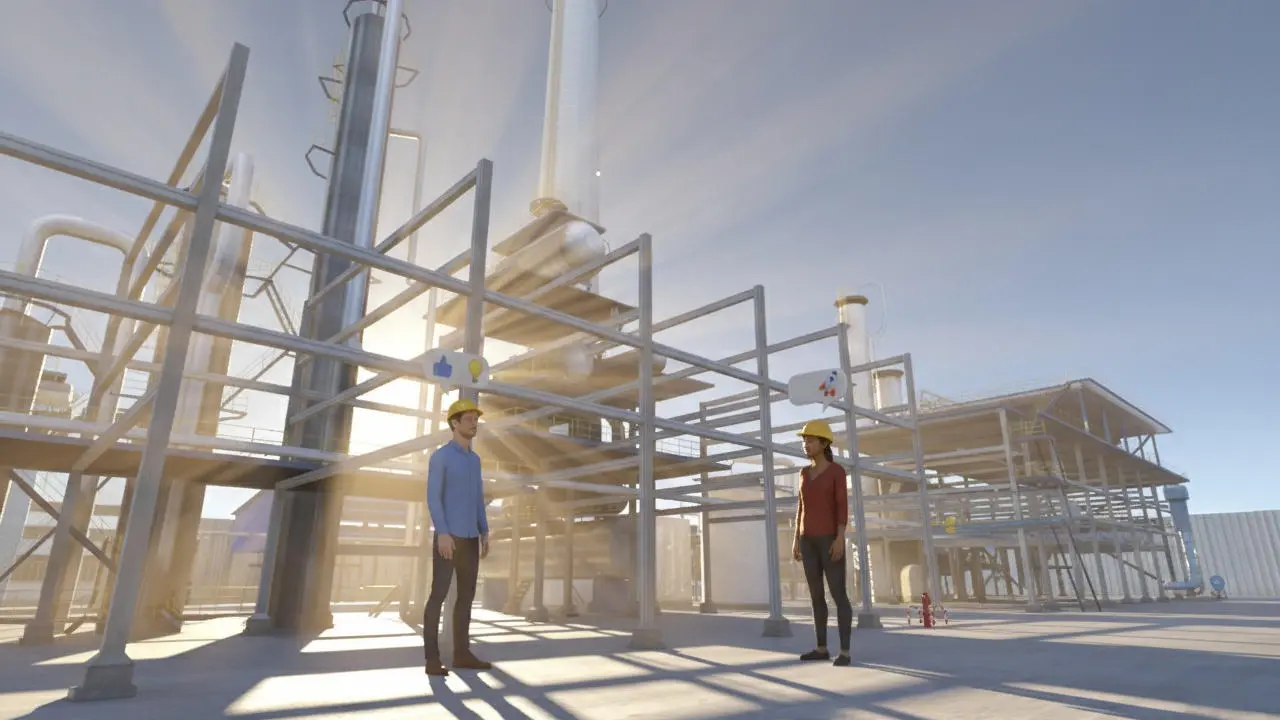
Unlike consumer virtual worlds, a B2B metaverse focuses on concrete professional use cases. Our solution allowed enterprise teams to meet in immersive 3D environments and collaborate in real time, regardless of their geographic location.
Users accessed the platform via their web browser, smartphone or a virtual reality headset. Once connected, they could:
- Move freely through customized virtual spaces
- Interact with multimedia content (documents, videos, presentations)
- Communicate via text, voice or screen sharing
- Manipulate 3D objects for product demonstrations
- Take part in immersive training sessions
Why do enterprises need a metaverse?
The metaverse market, and more broadly the mixed reality applications market for enterprises, is experiencing steady growth. According to several studies, it could represent several billion dollars by 2030, driven in particular by the demand for training, remote collaboration and virtual events.
As part of this project, I was able to experiment with different use cases for numerous companies.
Immersive training: learning without risk
One of the most compelling use cases concerns training in high-risk occupations. In construction, energy and industrial maintenance, replicating certain dangerous situations in training is simply not feasible.
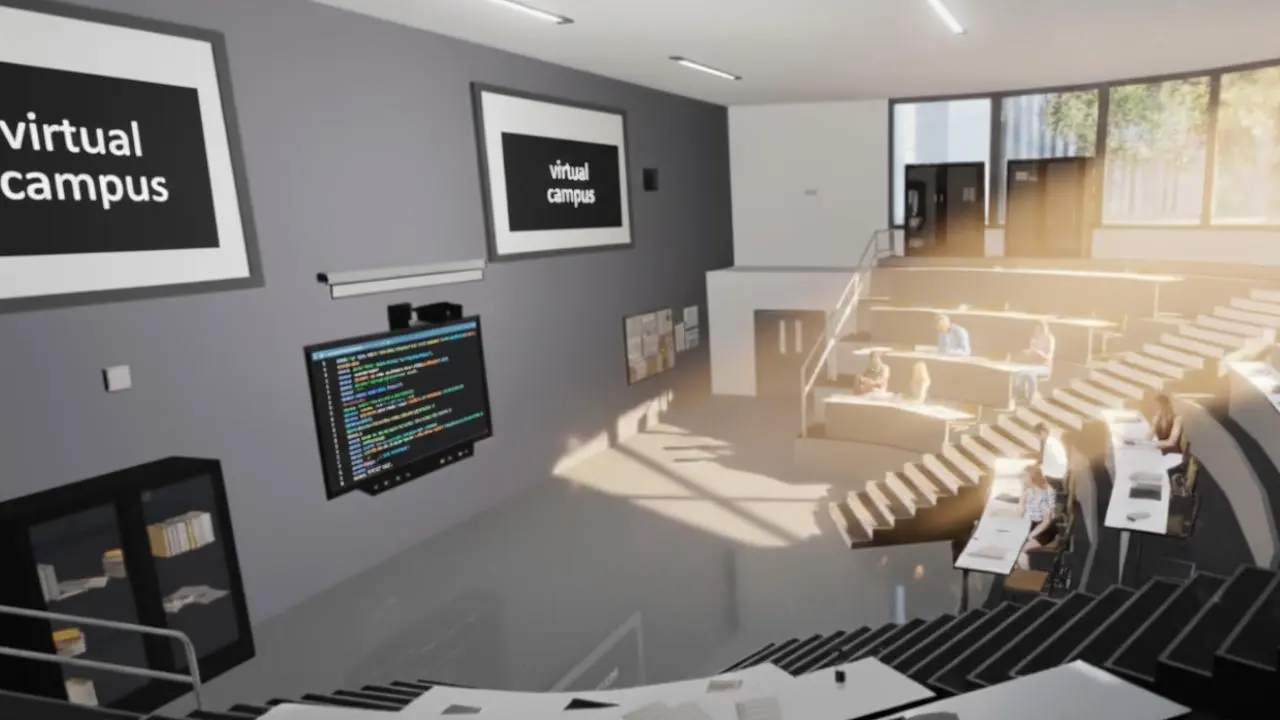
Our metaverse offered a safe alternative: field technicians and agents could train in virtual environments faithfully reproducing real-world conditions, including emergency scenarios. An Enedis technician could, for example, learn how to intervene on an installation without any physical risk whatsoever.
The benefits are numerous:
- Unlimited repetition of exercises until full proficiency is achieved
- Zero risk of accident during training
- Significant savings on traditional training costs
- Enhanced retention thanks to the immersive experience
SNCF Réseau also used our solution to build a genuine Industry 4.0 training platform, with full-scale reproductions of passenger stations and immersive 3D content placing agents in realistic conditions for risky or hard-to-replicate real-world interventions.
One of the key strengths of the developed solution was the ability for trainers to connect alongside learners in real time — to guide, assist and influence scenarios on the fly.
Studies conducted by PwC have shown that virtual reality learners are up to 4 times more focused than those using conventional e-learning solutions, and feel 275% more confident in applying their new skills.
Virtual events: breaking down borders
Corporate communication also found in this metaverse project a remarkable ground for technological innovation. Organizing conferences, trade shows or seminars traditionally requires complex and costly logistics.
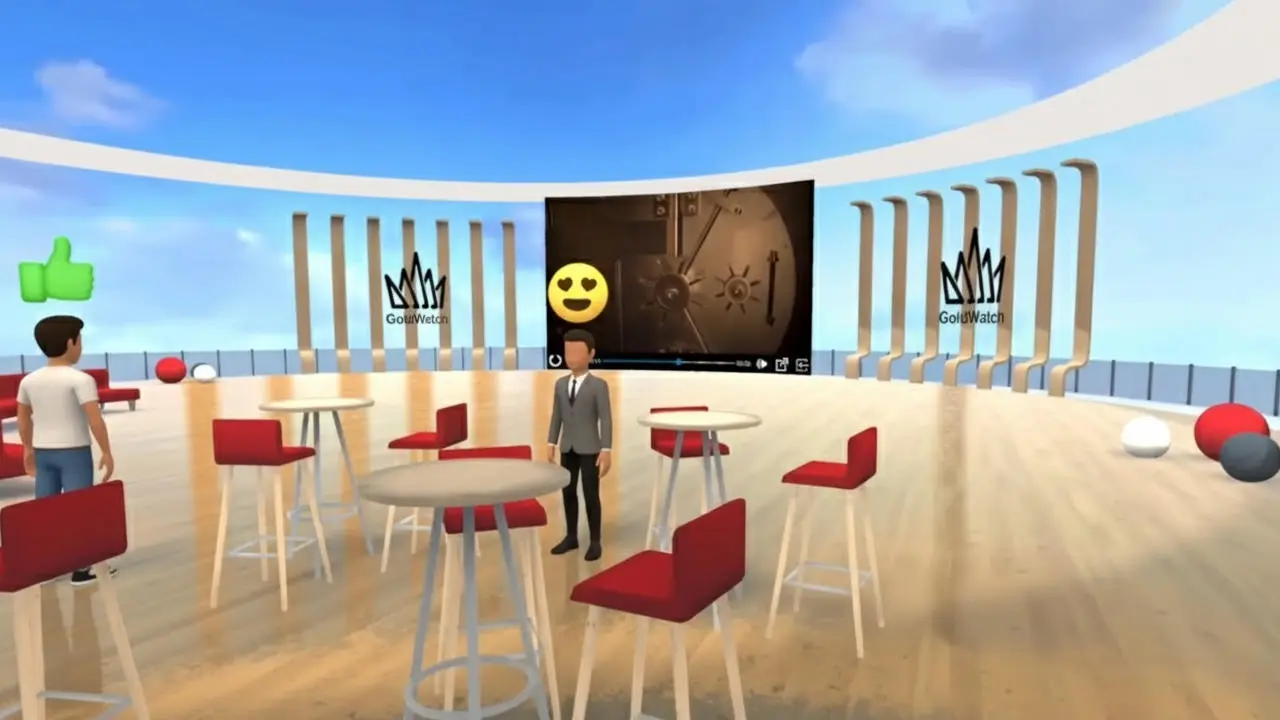
Our solution enabled the creation of immersive virtual 3D events accessible from anywhere in the world. A company could:
- Organize virtual tours of its facilities
- Run interactive booths at digital trade shows
- Offer hands-on 3D product demonstrations
Virtual immersion opens up possibilities that are impossible in the physical world, such as manipulating complex objects with multi-layered data overlays.
The developed metaverse solution: three pillars for a complete ecosystem
The user application: ergonomics that adapts to the device and assigned roles
The first challenge was to ensure maximum accessibility. We developed a multiplatform application running on desktops, smartphones, tablets and standalone VR headsets (Oculus Quest).
The main features included:
- Intuitive navigation: free movement or instant teleportation within 3D environments
- Customizable avatars: representing oneself in the virtual world
- Rich communication: text chat, high-quality voice, real-time screen sharing
- Content broadcasting: interactive PDFs, videos, 360° videos, 3D objects, live streaming
- Intelligent caching system: progressive download for a smooth experience even on modest connections
The administration platform: the control center
For enterprise managers, we designed a comprehensive web interface enabling the entire ecosystem to be managed without any specific technical skills.
This platform offered:
- User management: invitations, access rights, roles (participant, host, observer)
- Event scheduling: calendar, automatic invitations, reminders
- Environment customization: drag-and-drop interface to compose custom spaces from a ready-to-use catalog
- Content library: centralized media management (photos, videos, documents, quizzes)
- Analytics: participation and engagement statistics
The goal was to make creating virtual experiences as straightforward as possible.
Creation tools: going further
For specific needs requiring custom environments, we offered a suite of professional tools aimed at 3D artists and technical teams.
These tools allowed users to:
- Create interactive 360° virtual tours with point-to-point navigation
- Import industrial 3D models (CAD) and adapt them to the metaverse
- Design complete 3D environments with custom scenarios
- Integrate animations and complex interactions
This three-tier approach ensured that every type of user had the tools suited to their needs, from the simple participant to the 3D expert.
Technical challenges: how to run an enterprise-scale metaverse?
Without going into overly technical details, building a professional metaverse platform represents a considerable engineering challenge.
Feel free to contact me to learn more about the technical side.
Performance and accessibility: a delicate balance
The main obstacle was running complex 3D environments on as many devices as possible, including standalone VR headsets with limited resources and standard enterprise computers.
Using the Unity 3D engine for the client application:
- Advanced graphical optimization: intelligently reducing scene complexity without sacrificing visual quality
- Dynamic level of detail: rendering automatically adapted to device capability and viewing distance
- Pre-computed lighting: photorealistic rendering at zero real-time performance cost
- Modular architecture: splitting large environments into smaller sections loaded on demand
These optimizations allowed us to deliver a smooth experience even on modest hardware configurations.
Networking and security: integrating with enterprise infrastructure
Deploying a real-time solution within a company's information system requires working within strict security constraints. Enterprises legitimately protect their networks, which can block certain types of connection.
We implemented:
- Protocol flexibility: automatic adaptation to network constraints (WebSocket, UDP, relay servers)
- Proxy compatibility: configuration to pass through enterprise security systems
- Secure authentication: integration with existing identity management systems
- Certification: audit and compliance of the solution with existing policies
Each deployment required close collaboration with IT departments to guarantee both security and performance.
Cloud infrastructure: scalability and global availability
Our architecture was built on a microservices approach with automatic server provisioning on demand.
Key points:
- On-demand session servers: automatic creation of dedicated instances for each event
- Geolocation: deploying servers close to users to minimize latency
- Content-based capacity limits: up to 30 active participants and 100 observers per session to guarantee an optimal experience
- Automated load testing: simulating hundreds of virtual participants to validate robustness
This infrastructure allowed us to support clients for events of any size, from team meetings to international conferences.
The project's legacy
Unfortunately, the 2020 health crisis upended the start-up ecosystem, and despite a renewed interest in remote collaboration solutions, the company did not survive the economic turbulence that followed.
This experience nonetheless remains one of the most enriching of my career. I was able to push the boundaries of what technology can bring to the professional world, and I gained rare expertise in real-time 3D and collaborative virtual environments.
The B2B metaverse is still in its early stages. Enterprises are gradually discovering the potential of these technologies for training, collaboration and virtual events. The technical challenges we tackled — performance, accessibility, security — remain relevant today, but the solutions we developed have proven their viability.
The future of the B2B metaverse: AI as the engine of immersion
The metaverse is no longer limited to 3D scenery — it is becoming "intelligent." The integration of AI is radically transforming the user experience in these virtual worlds:
-
NPCs & intelligent instructors: thanks to LLMs, training avatars can now engage in natural dialogue with learners, answer complex questions about technical procedures and adapt their teaching approach in real time.
-
Automated performance analysis: AI can analyze user movements and decisions within the metaverse to instantly generate competency reports and identify unmastered risk areas.
-
Procedural environment generation: using generative AI to create or modify 3D environments on the fly, enabling the simulation of an infinite number of variants of the same industrial site for training purposes.
-
Contextual assistance (RAG): allowing users to verbally query the company's technical documentation directly inside the simulation, with the AI extracting relevant information from PDF manuals and displaying it in 3D.

Ready to build your own immersive and intelligent ecosystem?
If you are considering developing a metaverse solution for your organization — whether for secure immersive training, virtual events or 3D collaboration — the challenge today is to combine that immersion with robust software intelligence.
Drawing on my experience as lead developer and my current expertise in generative AI, I help organizations design next-generation 3D platforms through my studio Tridimotion. From complex network architecture to the integration of autonomous AI agents, I turn your vision into a high-performance, scalable production tool.
Contact me to explore how the fusion of 3D and AI can redefine collaboration within your organization.
This article is part of a series on my professional experiences in developing innovative solutions. To discover more projects, visit my portfolio..