Immersive 3D applications: virtual showrooms and VR training
Real-time 3D and virtual reality are no longer technologies reserved for entertainment. Today they are revolutionizing the way companies train their teams, showcase their products and collaborate remotely. Throughout my career, I have had the opportunity to design immersive applications for sectors as varied as industry, defense, events and retail.
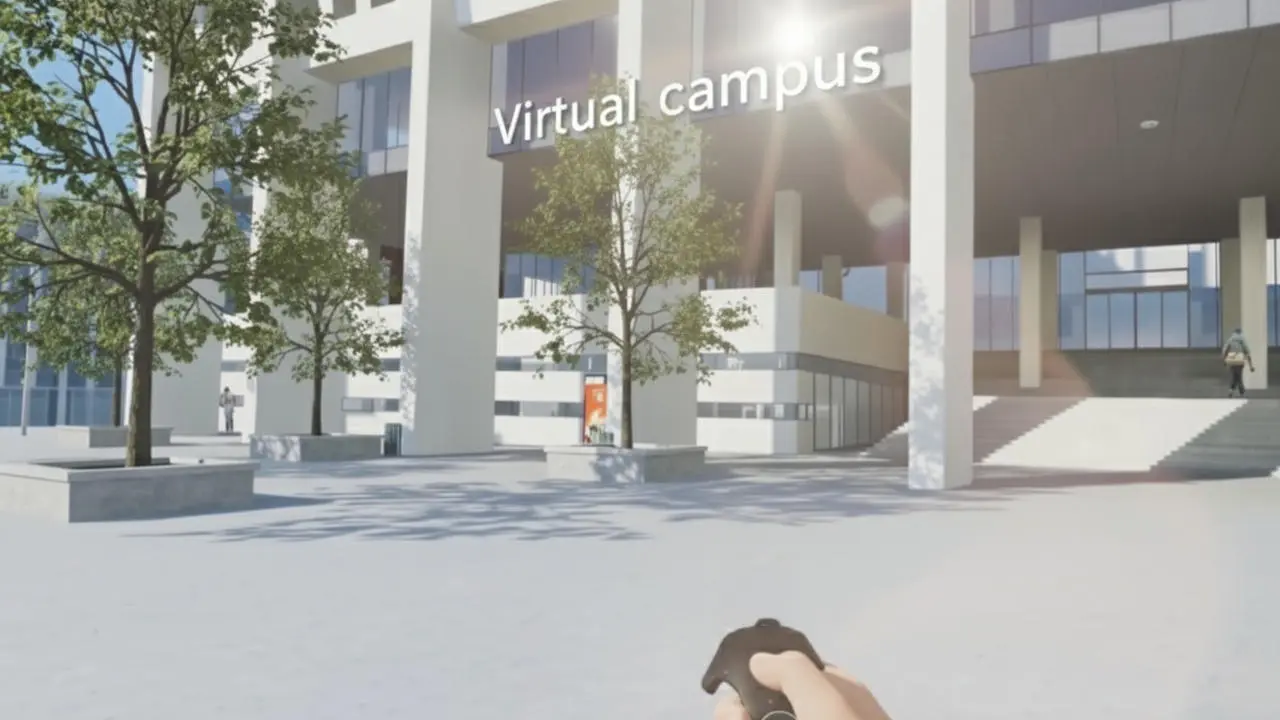
This article presents these real-world experiences and, I hope, will inspire you to take the leap into developing immersive experiences in your own digital projects.
What is a 3D virtual showroom?
A virtual showroom is much more than a simple digital storefront. It is an interactive 3D environment that allows you to present your products, services and expertise under conditions impossible to recreate physically.
Imagine being able to:
- Present your entire product range simultaneously in an unlimited space
- Organize technical demonstrations in reconstructed and enriched environments
- Create immersive scenarios tailored to each use case
The possibilities are endless: fewer logistical constraints for strategic and memorable presentations, specialized business environments for technical demonstrations, augmented real-time data displays... Every space can be custom-designed to best showcase your message.
Why immersive 3D works
A widely cited learning statistic states that humans retain 10% of what they read, 50% of what they see, and 80% of what they experience. This principle is especially evident with immersive experiences: 3D transforms learning and discovery into a lived experience, dramatically amplifying impact and retention.
According to a PwC study, virtual reality training enables a reduction in training costs of up to 40% while significantly improving learning outcomes. The return on investment quickly becomes tangible.
Multi-user VR showroom for Alcatel-Lucent Enterprise
One of the most ambitious projects I worked on involved creating an immersive showroom to present Alcatel-Lucent Enterprise's ecosystem of connected solutions in the industrial and education sectors.
The challenge: making complex IoT solutions understandable
How can you effectively explain the interconnected operation of dozens of devices (intrusion detection, telecommunications, surveillance cameras, alert systems...) without losing your audience in technical complexity?
The solution: a narrative experience in two acts
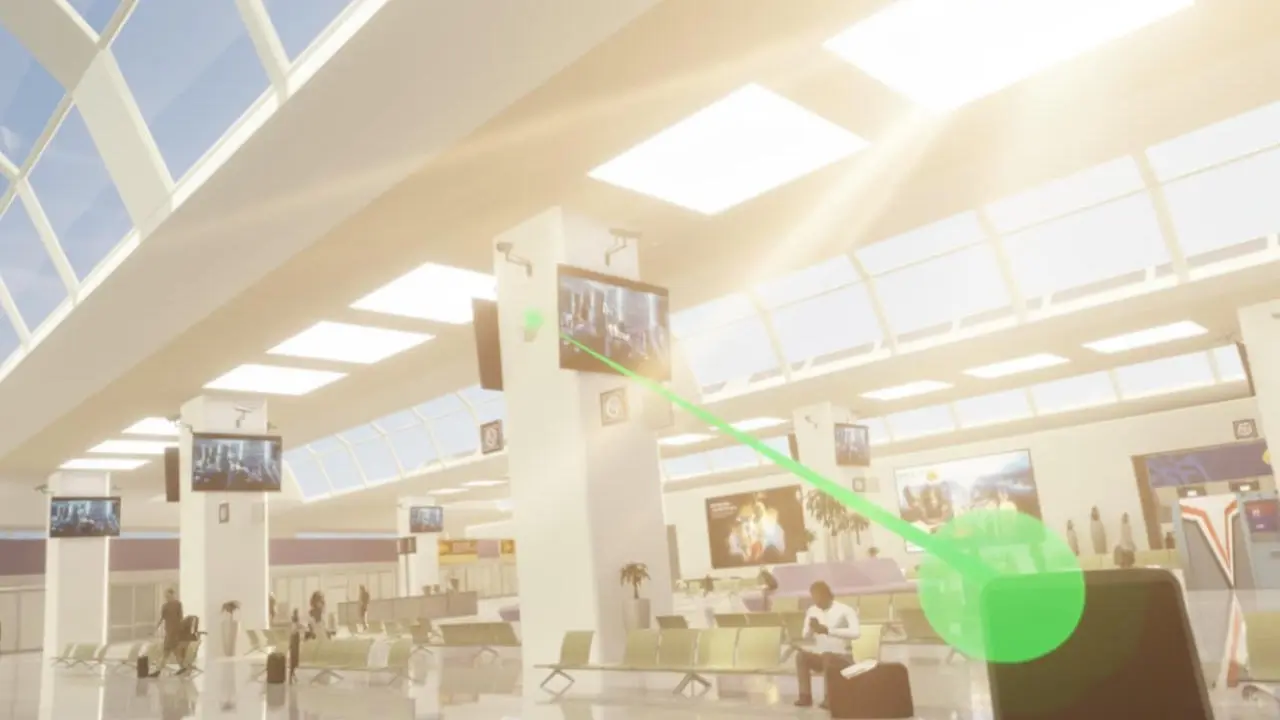
First act — the connected airport: visitors explore a fully 3D-reconstructed airport terminal where they discover how the various solutions interact to ensure the security and smooth operation of the infrastructure.
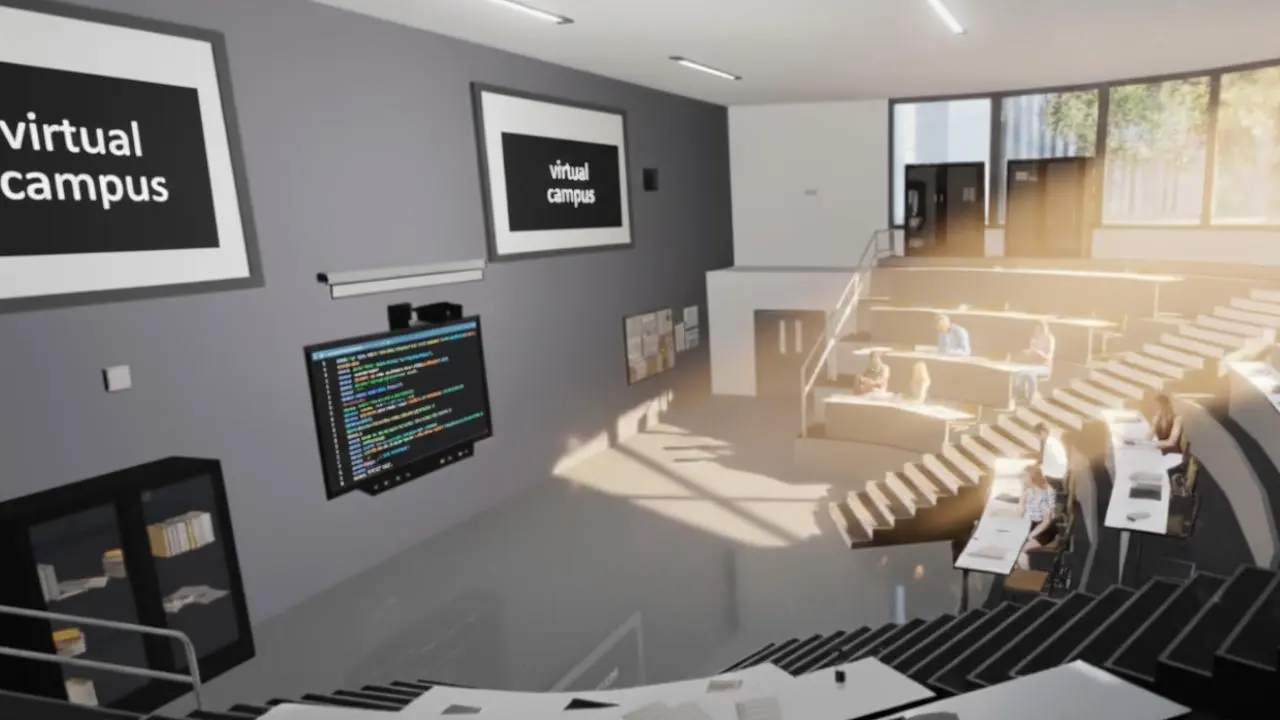
Second act — the university campus: the experience continues with the scenario of a typical student day faced with an emergency situation (fire). Visitors follow her journey through the campus, classroom, library and dormitory, discovering along the way how each connected system contributes to safety.
Key highlights of this project
- Multi-platform: accessible on PC, Mac and in virtual reality
- Collaborative: up to 5 people connected simultaneously
- Guided tour: a PC-based host accompanies VR headset users in real time, with a laser pointer and control over the progression
- Integrated communication: voice chat for natural exchanges during the visit
This approach enabled the client to transform classic sales presentations into genuine immersive demonstrations, generating an unprecedented level of engagement and retention.
3D virtual stand for the Salon de l'Agriculture
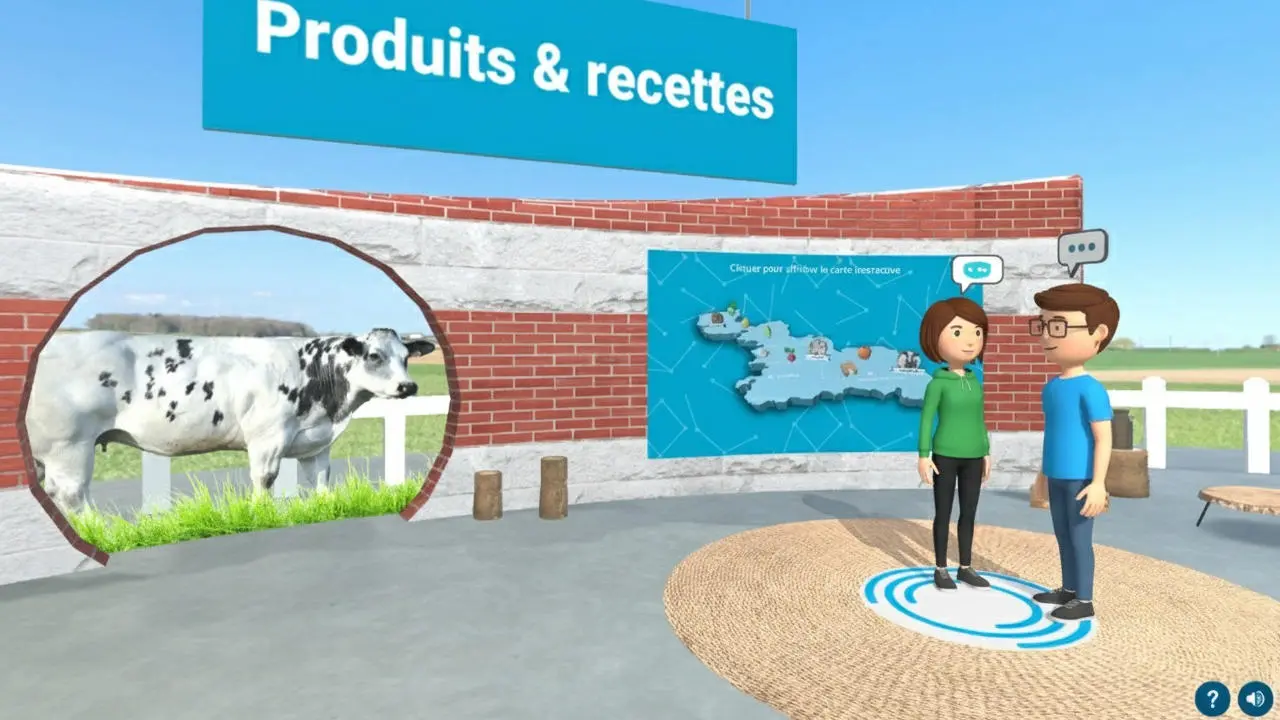
In 2021, the cancellation of the Salon de l'Agriculture forced many exhibitors to rethink their strategy. The Nord department chose innovation: creating an online virtual stand to showcase its producers and local terroir.
A credible alternative to the physical trade show
The virtual stand offered several themed spaces:
- Projection area: exclusive documentaries screened on an immersive large display
- Quiz space: interactive game on the department's themes and local gastronomy
- 3D interactive map: exploration of the region with points of interest revealing multimedia content (products, recipes, producer testimonials)
Technical challenges addressed
The main complexity lay in accessibility. The site had to work on all devices, including smartphones, while delivering a smooth 3D experience.
Solutions implemented:
- Development with Unity3D WebGL for maximum compatibility
- Extensive 3D model optimization and fine-grained memory management
- Back-office enabling content updates without technical intervention
- Cloud infrastructure (AWS) sized to absorb traffic spikes
The virtual stand welcomed thousands of visitors, demonstrating that a well-designed digital experience can create genuine engagement, even without a physical presence.
VR training module for Enedis
Enedis wanted to modernize the training of its technicians on connecting generators to low-voltage switchboards, a technical operation requiring precision and strict adherence to safety procedures.
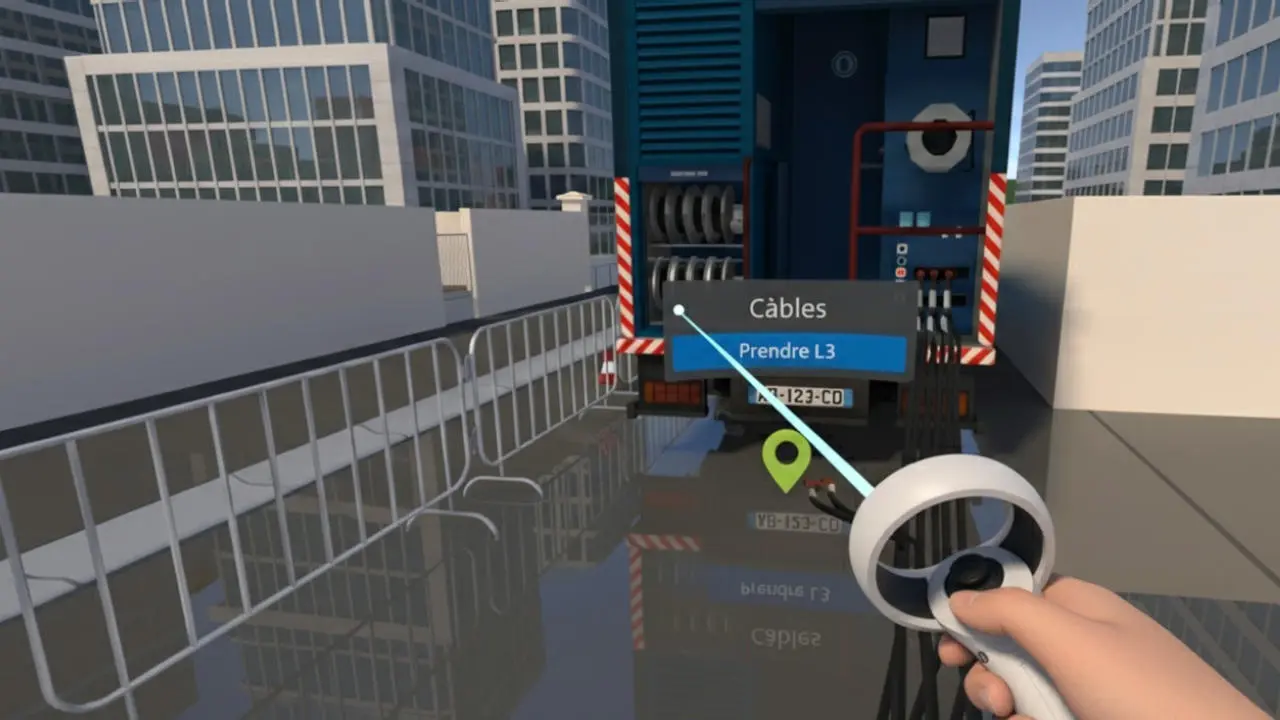
A progressive and measurable training approach
The developed module combined three complementary approaches:
1. Interactive theory course: multimedia content enriched with 3D animations explaining the fundamental principles
2. Knowledge validation quiz: online assessment to ensure theoretical knowledge has been acquired
3. VR serious game: a realistic scenario in which the learner performs the complete procedure in virtual reality, with real-time analysis of their actions
Integrated learning management
A dedicated back-office allows trainers to:
- Track each learner's progress
- Identify recurring difficulty points
- Adapt training paths based on results
- Generate competency reports
This approach enabled a 30% reduction in training time while significantly improving pass rates in practical assessments.
Virtual tour of a medical laboratory
Some professional environments are rarely accessible to the public for reasons of hygiene, security or confidentiality. This was the case with Horiba Medical's production laboratory.
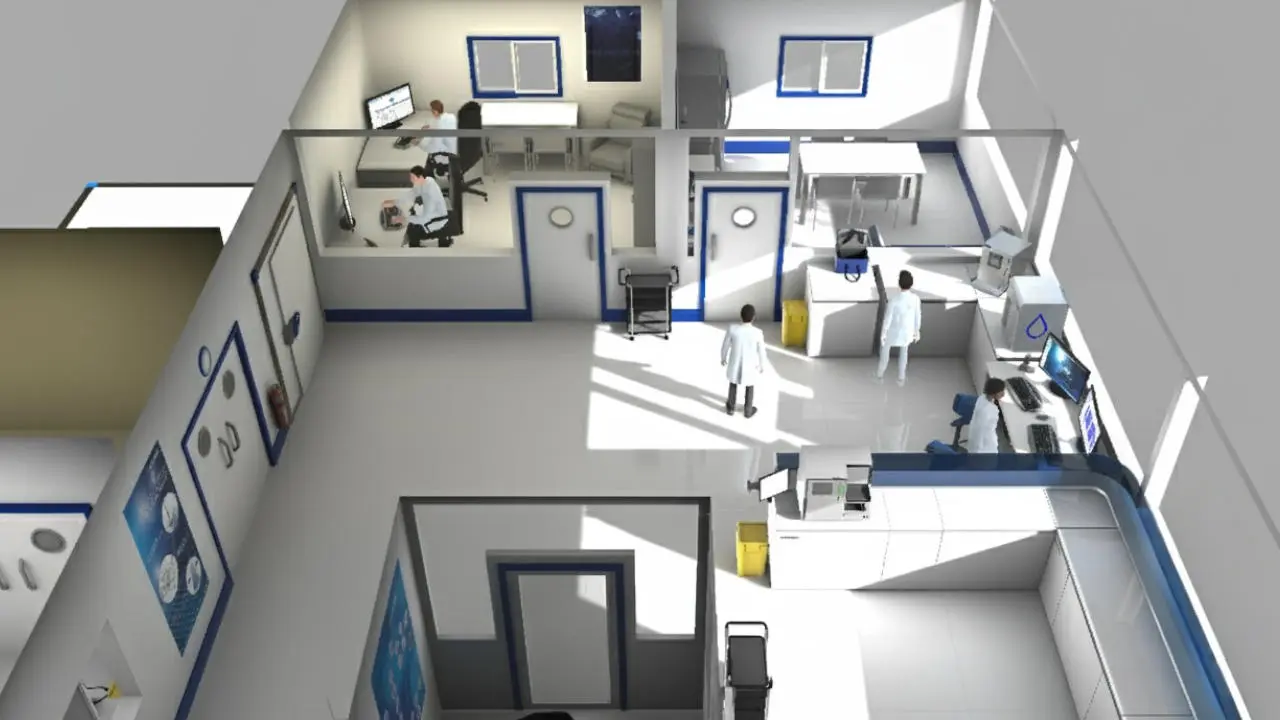
Opening the doors of the inaccessible
The developed solution allowed users to:
- Virtually visit the entire laboratory in high-fidelity 3D
- Discover equipment and its operation through integrated 360° videos
- Follow different visit scenarios based on areas of interest
- Navigate freely or follow a predefined path
This virtual tour became a valuable marketing tool for presenting production capabilities to clients and partners, without the logistical constraints of a physical visit.
VR maintenance serious game
A major French IT services group needed a training tool for technicians working on computer servers in shelters (secure technical containers).
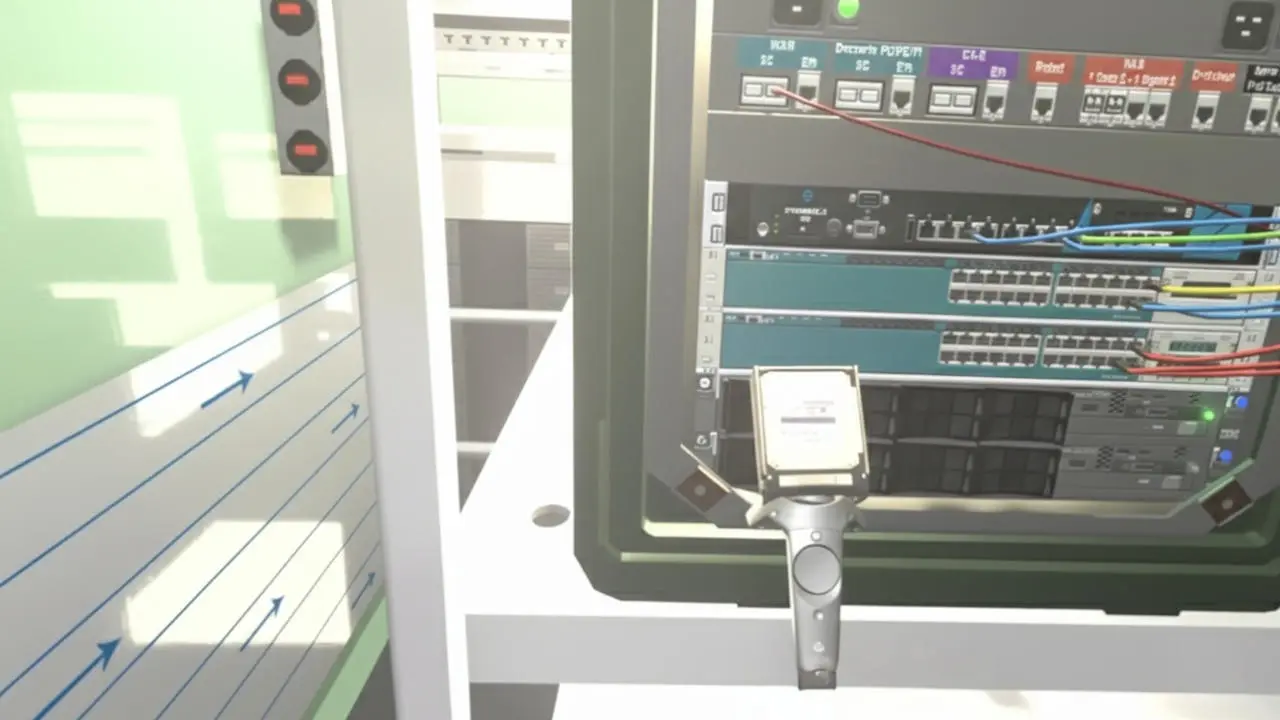
Technical training under realistic conditions
The application developed for the HTC Vive headset offered:
- Photorealistic 3D environment of the shelter and its equipment
- Advanced interactions: realistic grasping of tools and components with haptic feedback
- Intelligent analysis: real-time evaluation of the order and quality of operations
- Pedagogical feedback: summary screen with detailed score and areas for improvement
This approach allows technicians to practice complex procedures without monopolizing real equipment or risking damage to costly hardware.
3D web showroom for a print solutions specialist
This client wanted to present their products (business cards, flyers, event materials) in real-life usage contexts.
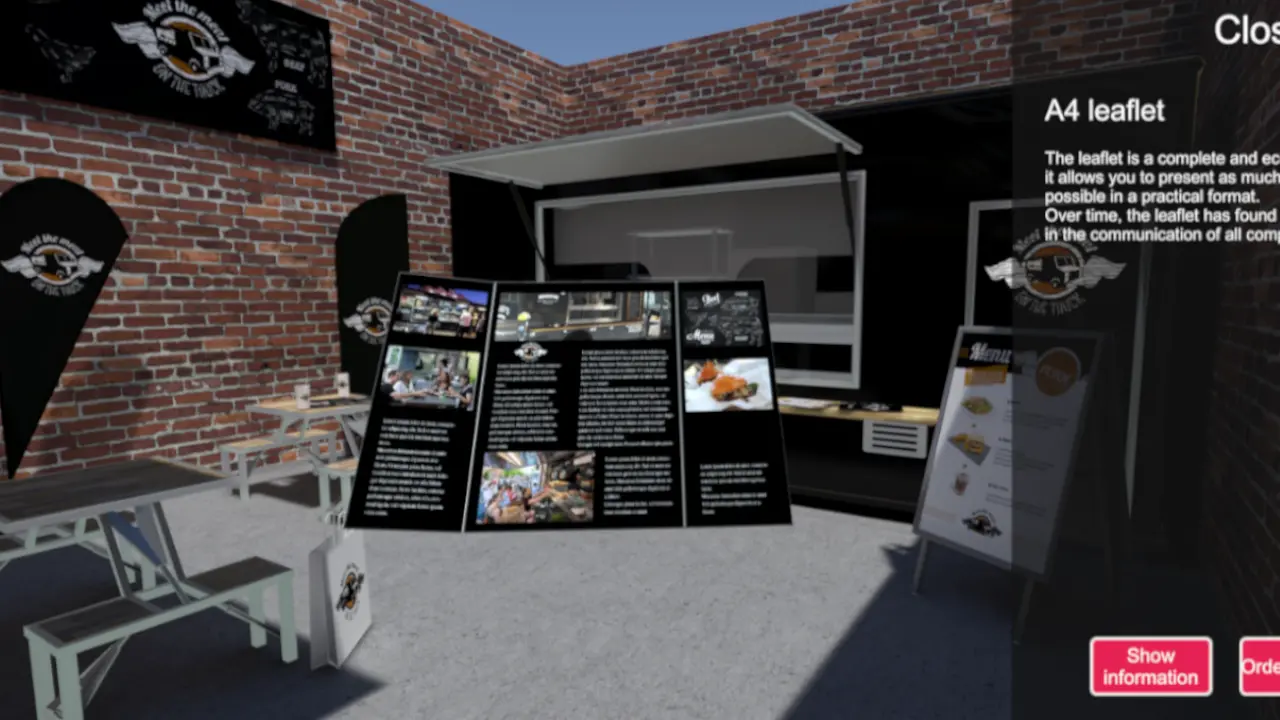
Contextual product staging
Rather than a static catalog, we created three interactive 3D environments:
- An elegant restaurant
- An urban food truck
- A hotel room
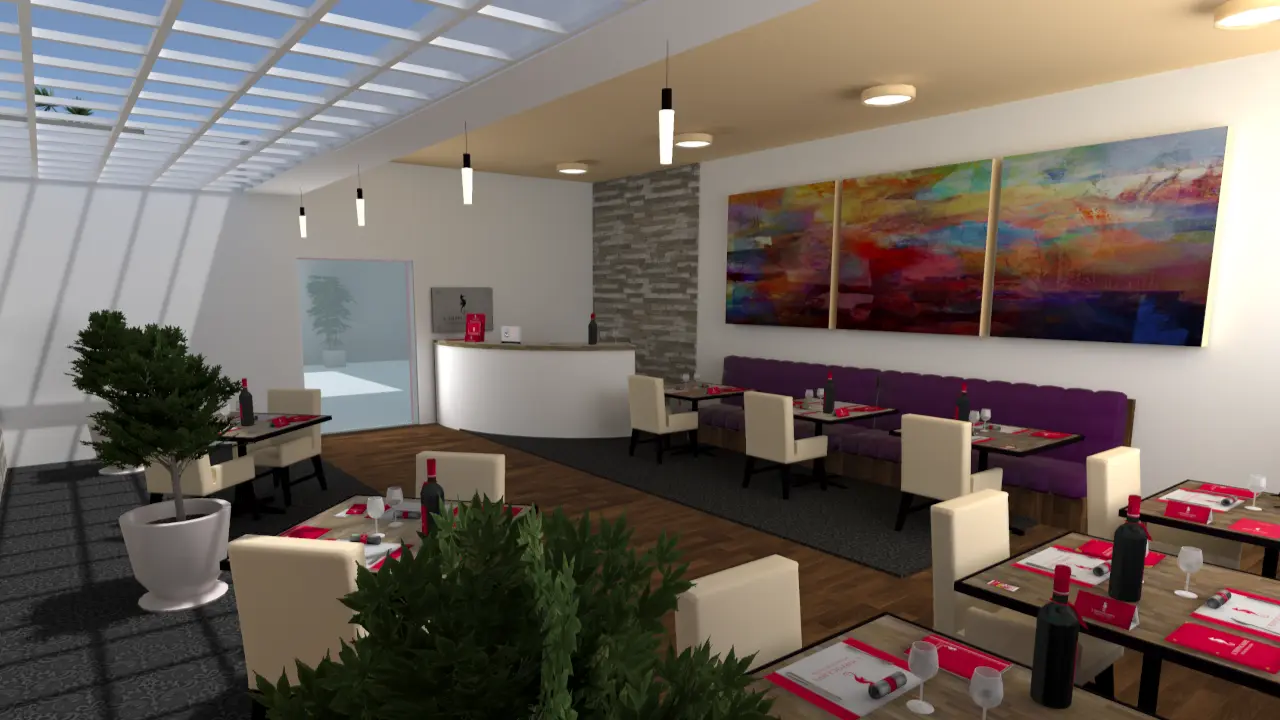
Visitors move freely, discover products naturally integrated into each setting, and can click to display a detailed product sheet with specifications and pricing.
This contextual approach helps clients better project themselves and concretely visualize how the products could be used in their own business.
POC: 3D advisory space for insurance and savings
An innovative project for the financial sector: creating a virtual advisory space where advisors and clients meet to discuss their life plans and savings goals.
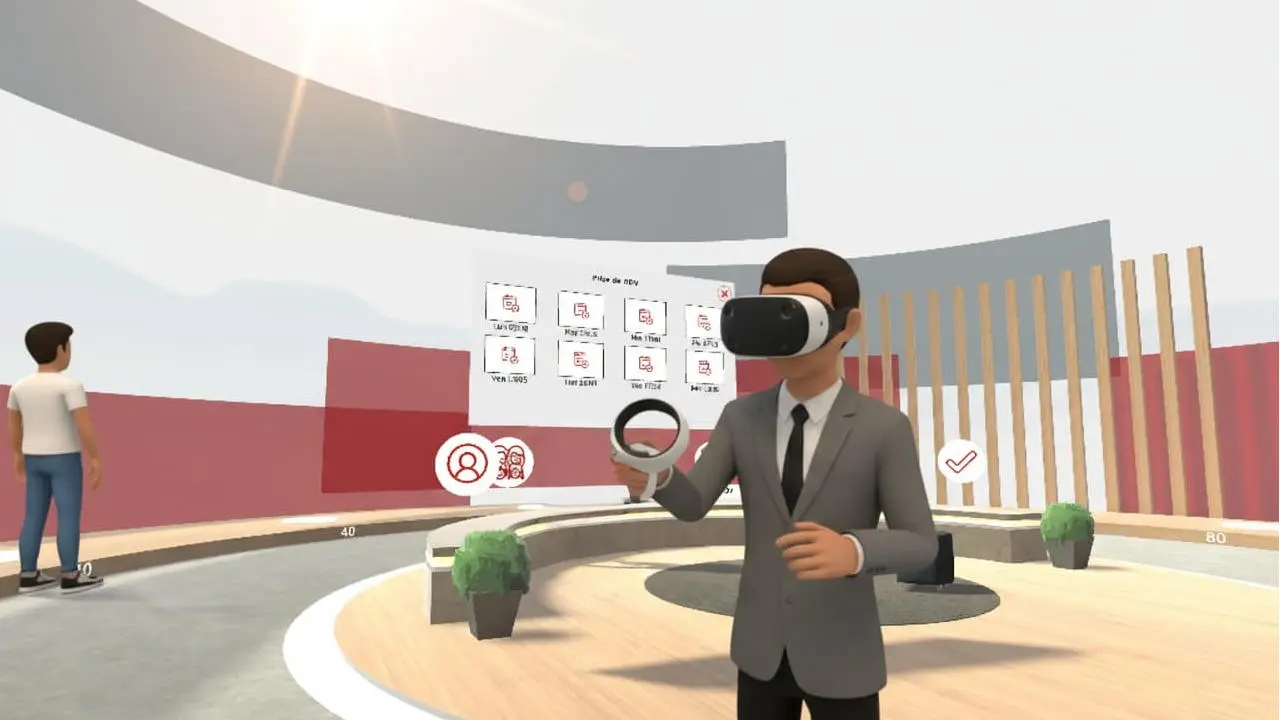
Reinventing the remote client experience
The developed journey worked as follows:
- The advisor connects to the 3D space and invites their client via a simple link
- After authentication, both avatars meet in a welcoming environment
- They participate together in various interactive workshops (quiz on life goals, presentation of savings solutions, project simulations...)
- The experience concludes with a timeline summarizing the recommended savings journey
This approach transforms a classic advisory appointment into an engaging and memorable experience, while making abstract financial concepts easier to understand.
Batimat stand for Wicona
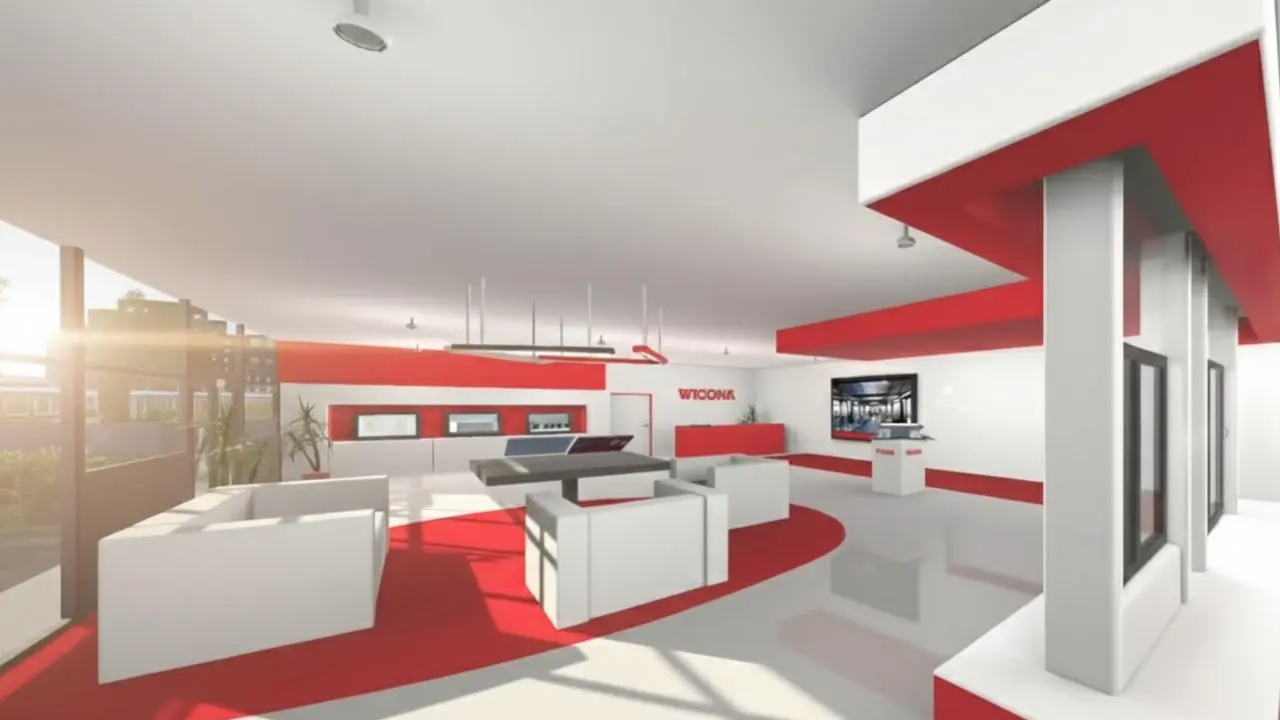
At the international construction trade show, Wicona equipped its stand with a virtual reality demonstration area. Visitors wearing Oculus Rift headsets could explore and interact with the complete range of aluminum joinery products in a variety of architectural environments.
This immersive presentation enabled visitors to:
- See products at real scale
- Experience opening mechanisms and security systems in action
- Visualize products in different architectural contexts
- Create a significant dwell time at the stand (15–20 minutes per visitor)
Smart home VR application: promoting an eco-responsible approach
To present their home automation product range, a client opted for a mobile application featuring an optional VR viewing mode (cardboard-type).
Prospects virtually visited a connected home equipped with the company's solutions, discovering in real-life context:
- Intelligent energy management
- Solar self-consumption
- Remote control of equipment from a smartphone
- Real-time visualization of energy savings
The application, available for free on the Play Store, generated several thousand downloads and qualified numerous commercial leads.
Immersive 3D for professional training
Beyond showrooms, training represents a major application area for immersive 3D. Here are the main use cases I have developed.
Interactive 3D assembly guides
Replacing paper manuals with interactive 3D guides offers numerous advantages:
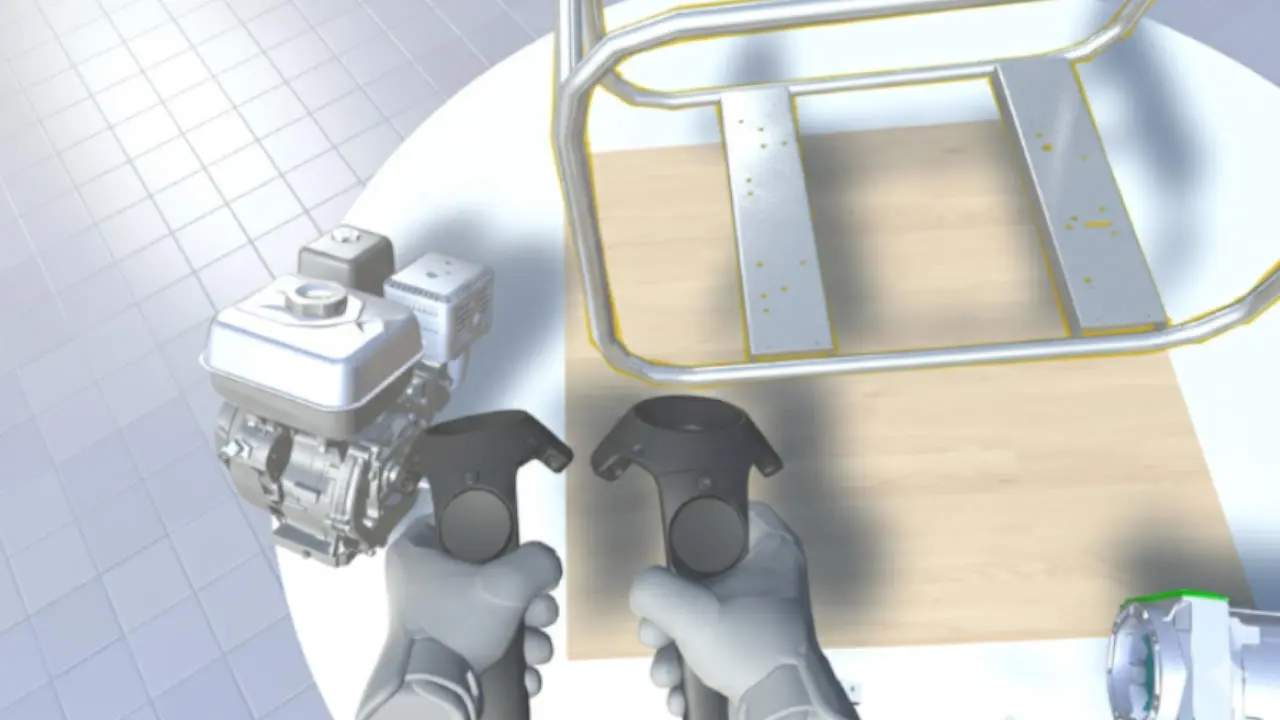
- Improved understanding: visualization of each step from any angle
- Error reduction: impossible to misalign a part
- Language-agnostic: no translation needed — 3D speaks to everyone
- Scalability: quick updates with instant distribution
I have developed several applications of this type for industrial clients, reducing assembly errors by non-specialists by up to 60%.
Risk prevention and safety training
The construction sector records nearly 87,000 accidents per year in France. The main causes are manual handling (48.5%), falls from height (17.1%) and tool use (14.9%).
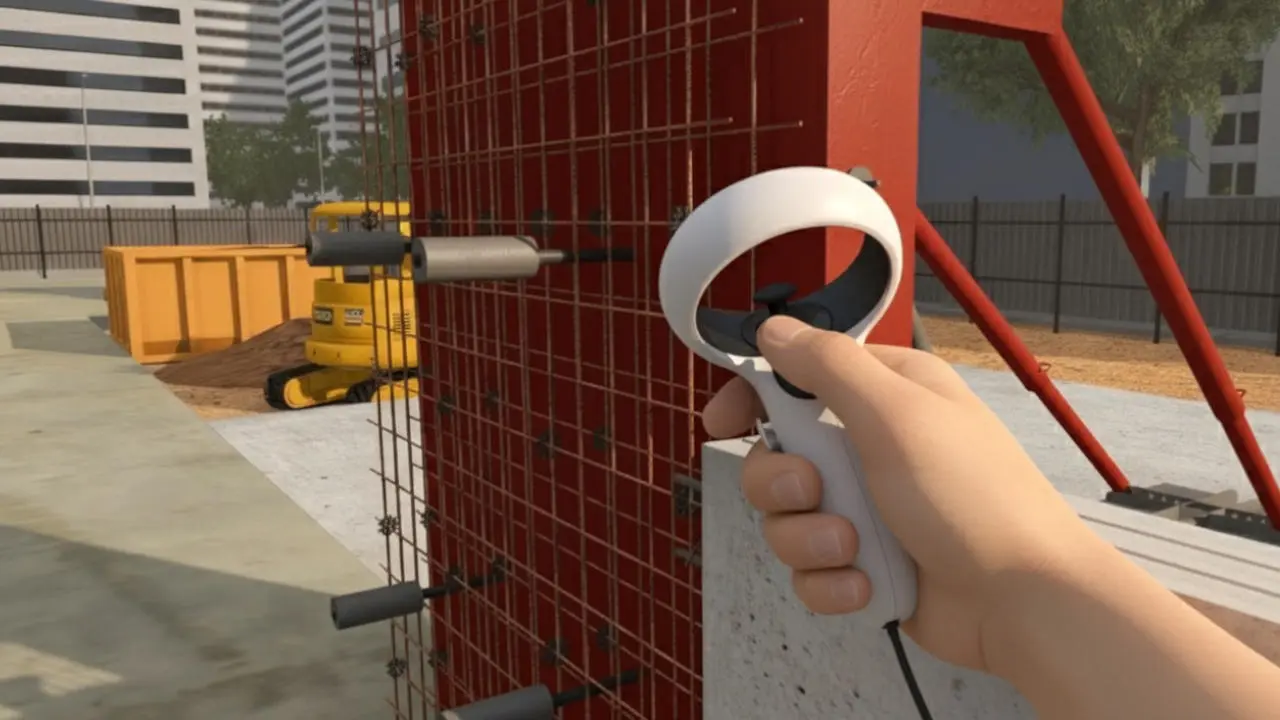
Virtual reality offers a unique training solution:
- Risk-free immersion: experiencing hazardous situations in complete safety
- Unlimited repetition: practicing until the right reflexes are acquired
- Emotional impact: scenario-based learning creates lasting memory
- Objective measurement: precise analysis of behaviors and decisions
I have designed several VR prevention modules covering falls from height, electrical hazards, machinery operation and emergency situations.
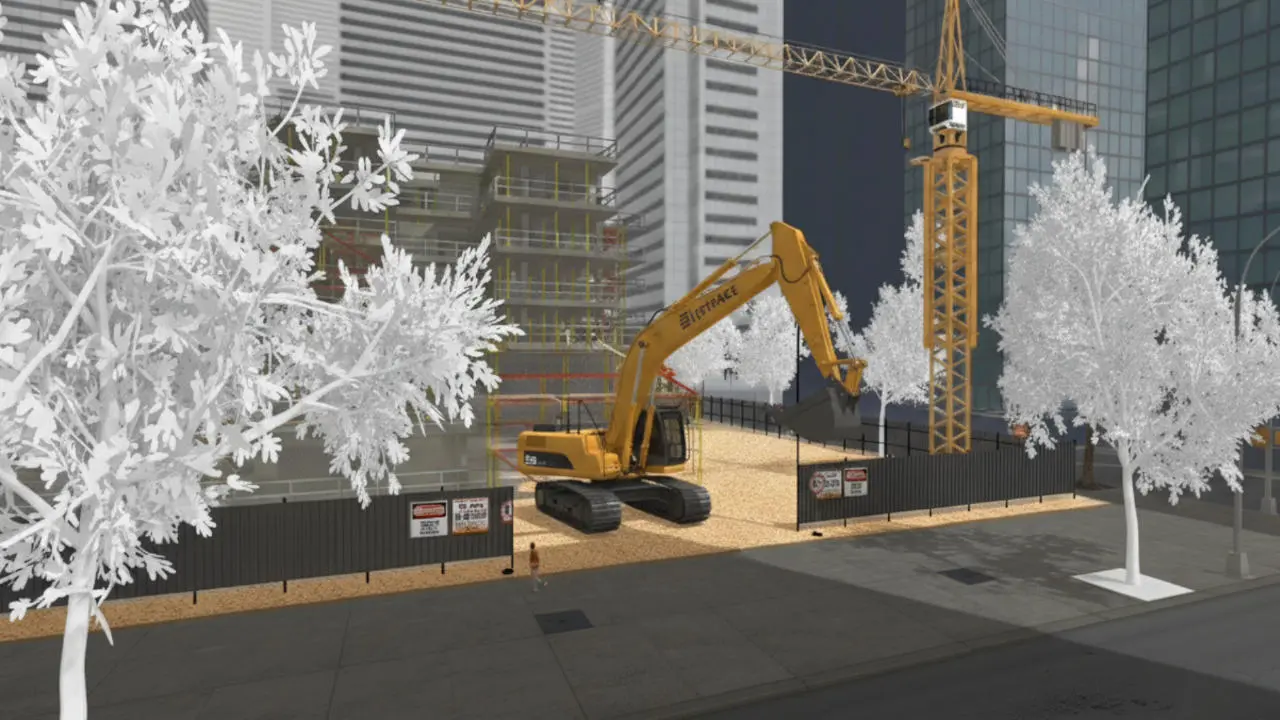
Virtual reality for operational training
Application sectors: aerospace, defense, security, energy, medical, maritime, maintenance, construction, transport, logistics.
Measured benefits:
- Training cost reduction: up to 99% for certain complex scenarios
- Accelerated learning: skills acquired 4 times faster
- Perfect reproducibility: all learners experience exactly the same scenario
- Maximum engagement: completion rates above 95%
Cross-cutting benefits of immersive 3D
Reduction of operational costs
Immersive learning enables substantial savings:
- Elimination of travel expenses for training sessions
- Drastic reduction in wear of training equipment
- Optimization of trainer time (remote monitoring of multiple learners simultaneously)
- Reduction of costs for dedicated training facility setup
Maximum safety
Reproduce dangerous scenarios with zero risk:
- Fires, explosions, combat situations
- High-altitude or confined-space interventions
- Handling of hazardous materials
- Extreme stress situations
Realistic scenario-based learning
The learner is active, not passive. They experiment, make mistakes and adjust their behavior. Action-based learning generates:
- Increased retention: 80% memorization vs. 10% for reading
- Maximum engagement: 4 times greater concentration than e-learning
- Boosted confidence: learners feel 275% more confident in applying new skills (PwC study)
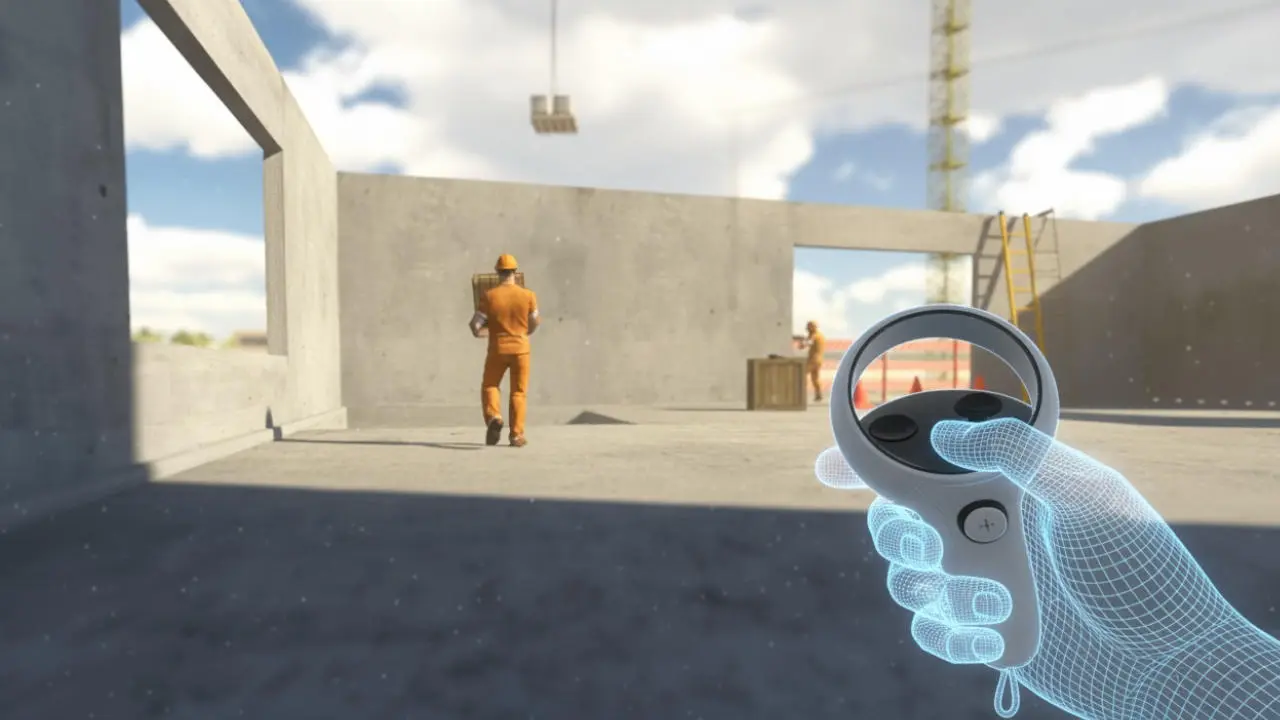
Accessibility and flexibility
- Remote or on-site training, at any time
- No dependency on expert trainer availability
- Instant content scalability
- Scalability: train hundreds of people simultaneously
Personalized pedagogy
3D platforms enable:
- Difficulty adaptation based on the learner's profile
- Differentiated learning paths by profession
- Automatic identification of knowledge gaps
- Targeted remediation exercises
Collaborative team training
- Group training in crisis situations
- Improved coordination and communication
- Development of team cohesion
- Assessment of collective dynamics
Real-time monitoring and analytics
Trainers can:
- Track the exact journey of each learner
- Precisely identify mistakes made
- Analyze reaction times and decisions
- Generate detailed competency reports
- Adapt training content based on usage statistics
Looking ahead: AI, the new engine of immersion
Immersive 3D is no longer limited to visuals — it now integrates deep intelligence:
-
Predictive digital twins: coupling real-time 3D with forecasting models to visualize not the current state of a factory, but its probable state 24 hours from now.
-
Real-time AI instructors: in your training modules, the learner is no longer alone. An AI agent (based on an LLM and a domain knowledge base) analyzes their actions and delivers personalized spoken guidance.
-
Spatial data analytics: using machine learning to analyze user paths within a virtual showroom and automatically identify which products capture the most attention.
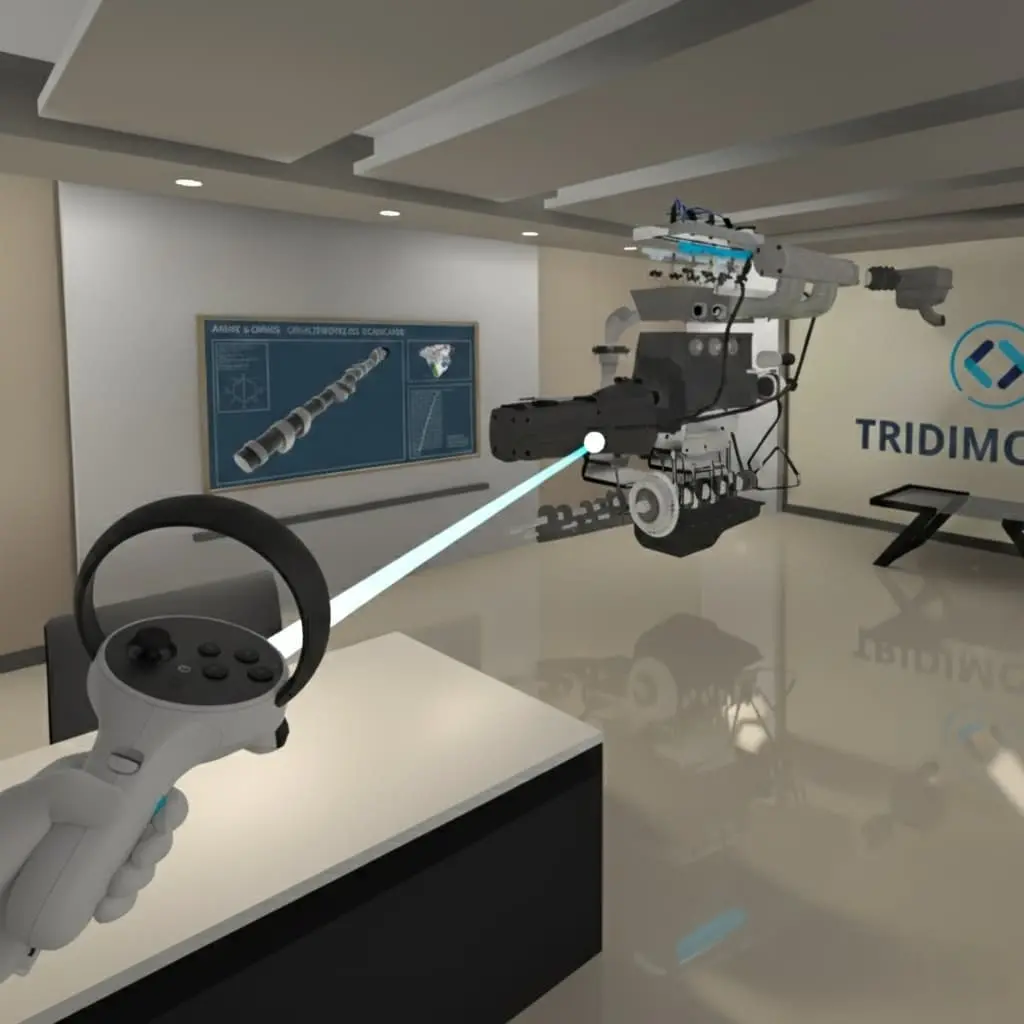
Ready to embrace intelligent innovation?
Whether you want to create a virtual showroom to showcase your products on a global scale or develop high-fidelity VR training modules, the challenge today is to combine immersion with software intelligence.
Drawing on my cross-disciplinary expertise in real-time 3D (Unity/WebGPU) and Artificial Intelligence (AWS Bedrock/Agents), I support you through my studio Tridimotion in designing experiences that are not merely visual, but genuinely "augmented" by data.
From designing your serverless cloud architecture to deploying your application on VR headsets or web browsers, I ensure the technical success and ROI of your immersive transformation.
Let's transform your business processes into impactful decision-making experiences together. Contact me for a personalized assessment of your project.
This article is part of a series on my professional experiences in developing innovative solutions. To discover more projects, visit my portfolio..