3D Configurator & Product Customization: Case Studies
Customization has become a critical challenge for businesses. Whether it's interior design, vehicle configuration, or personalizing furniture, consumers are looking for products that reflect who they are. Yet offering this freedom of choice while ensuring technical feasibility and profitability represents a considerable challenge.
This is where 3D configurators come in: applications that allow users to visualize a customized product in real time, verify its technical compliance, and instantly generate an accurate quote.
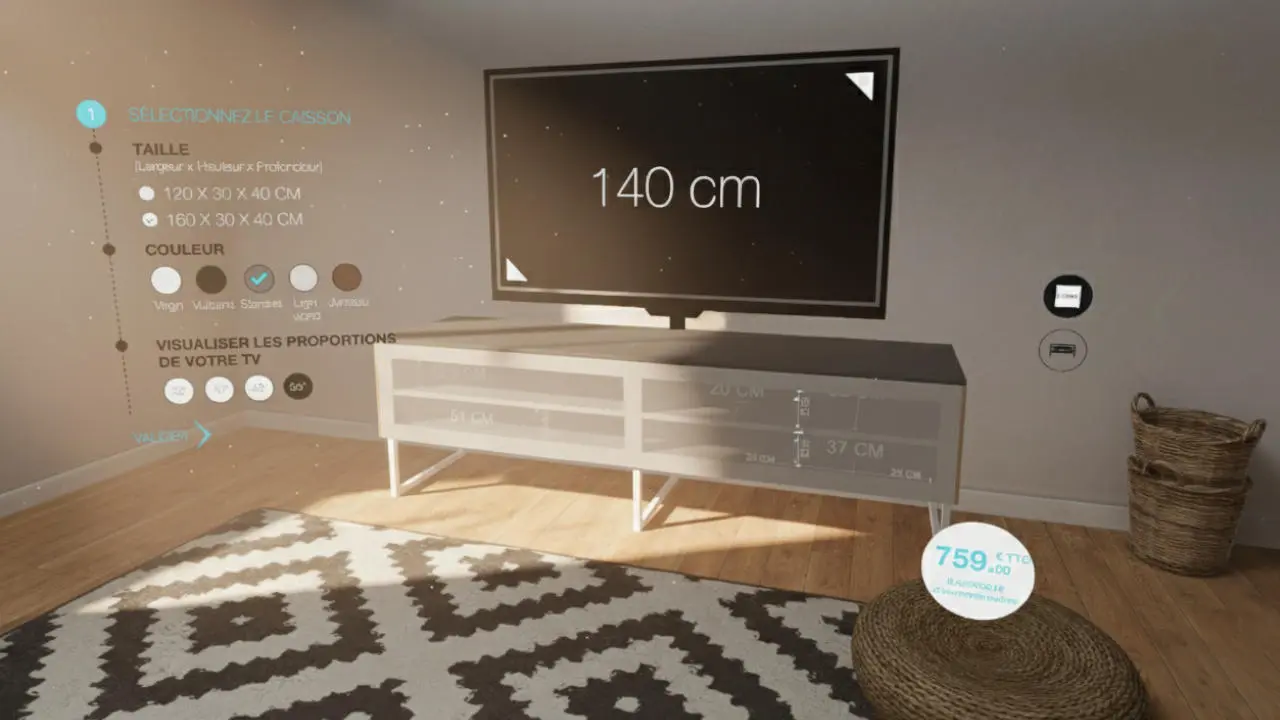
Throughout my career, I've had the opportunity to design and develop several of these innovative solutions across sectors as varied as construction, furniture, and automotive. This article traces those experiences and the technical challenges overcome to transform complex business needs into intuitive applications.
Why 3D configurators are transforming the customer experience
Before diving into the details of each project, it's important to understand why these tools are experiencing such success.
According to a Deloitte study, 36% of consumers are interested in personalized products, and that figure rises to 48% among millennials. Customers are willing to pay 20% more for a product they have adapted or customized themselves.
The benefits for businesses are numerous:
- Error reduction: automatic validation of technical constraints eliminates impossible configurations
- Faster sales cycles: from concept to quote in minutes instead of days
- Customer empowerment: the ability to explore all options without involving a sales rep
- Competitive differentiation: a premium experience that enhances brand value
These tools also deliver operational gains: fewer back-and-forths with technical teams, fewer manufacturing errors, and automated customer data collection.
Deck configurator: from sketch to quote in a few clicks
One of the most ambitious projects I worked on involved a manufacturer of indoor and outdoor flooring. The goal was to create a solution enabling homeowners to fully design their deck, from the layout to material selection, while automatically generating an accurate quote.
The challenge: making complexity accessible
Designing a deck is not just about choosing a tile color. You need to account for dimensions, installation constraints, load-bearing structures, pedestals, screws... a genuine technical puzzle that the configurator had to handle invisibly for the user.
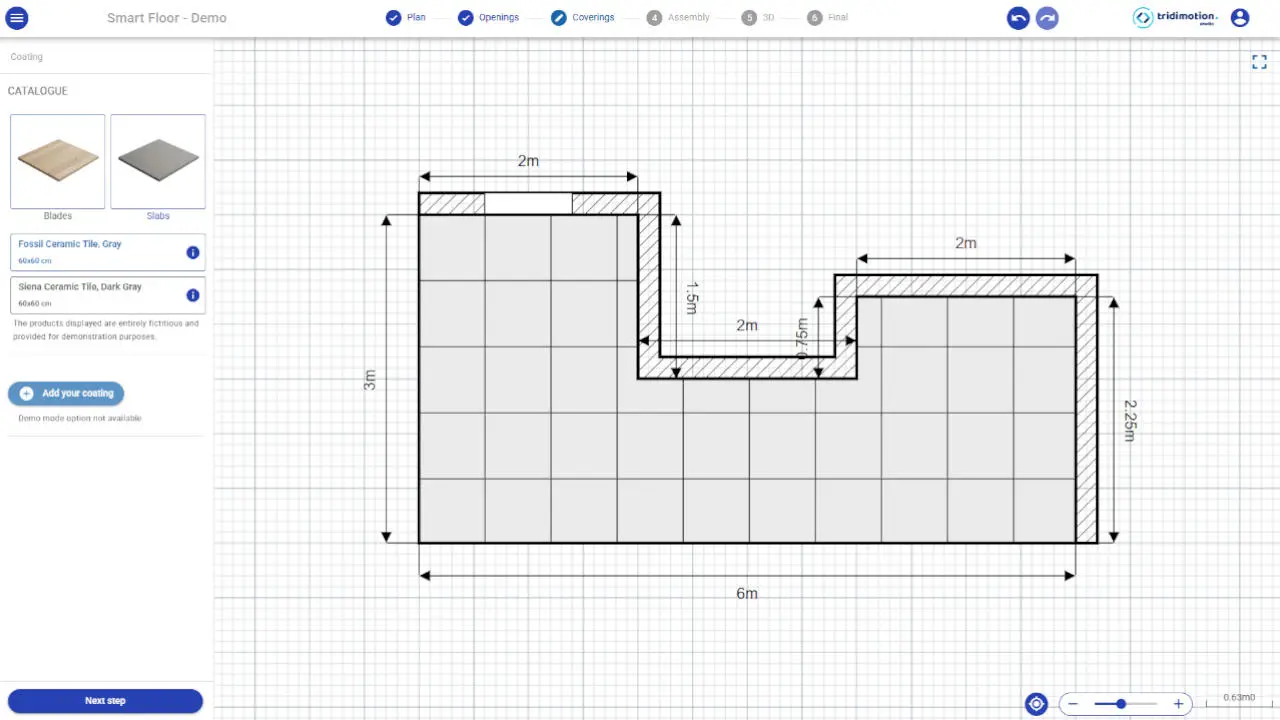
The Developed Solution
The application was designed as a progressive, guided experience:
Step 1 – Floor Plan Drawing: the user freely draws the outline of their deck on an intuitive interface, much like sketching on paper. The tool automatically detects angles and offers suggestions to simplify the drawing process.
Step 2 – Product Selection: choosing tiles (material, color, finish) and laying pattern (straight, diagonal, staggered joints...). The 2D preview updates instantly to show the result.
Step 3 – 3D Visualization: switching to an immersive view to appreciate the final result. The user can rotate the camera, zoom in, and even virtually place the deck in different environments.
Step 4 – Validation and Quote: the system automatically calculates all required components (exact number of tiles, pedestals, structures, accessories) and generates a detailed quote. An algorithm verifies the technical consistency of the project before validation.
Step 5 – Lead Connection: the prospect is directly connected with a network of installers approved by the brand. These professionals access the complete project via a dedicated dashboard: technical plan with dimensions, 3D view with structures, precise list of product references.
Measurable Benefits
This solution transformed the manufacturer's sales process:
- Conversion rate multiplied by 2.5: prospects who use the configurator order far more often
- 70% reduction in quoting errors: no more missing components in quotes
- Increased customer satisfaction: homeowners appreciate being able to concretely visualize their project before committing and adjust it in real time based on their budget.
Technology Stack
The application was developed in Vue.js for the user interface, ensuring smoothness and responsiveness. Plan management and calculations rely on TypeScript for maximum robustness. The 3D visualization uses Babylon.js, a high-performance web engine perfectly suited for this type of use.
The 3D product models were optimized from CAD files (STEP format) for conversion to GLTF, the standard format for web 3D. A dedicated backend handles cloud-based project saving and interconnection with the manufacturer's information system (product catalog, pricing, CRM).
Pergola configurator in augmented reality
Technal Group, the European leader in aluminum building systems, wanted to equip its dealers with a next-generation sales tool for their custom pergolas.
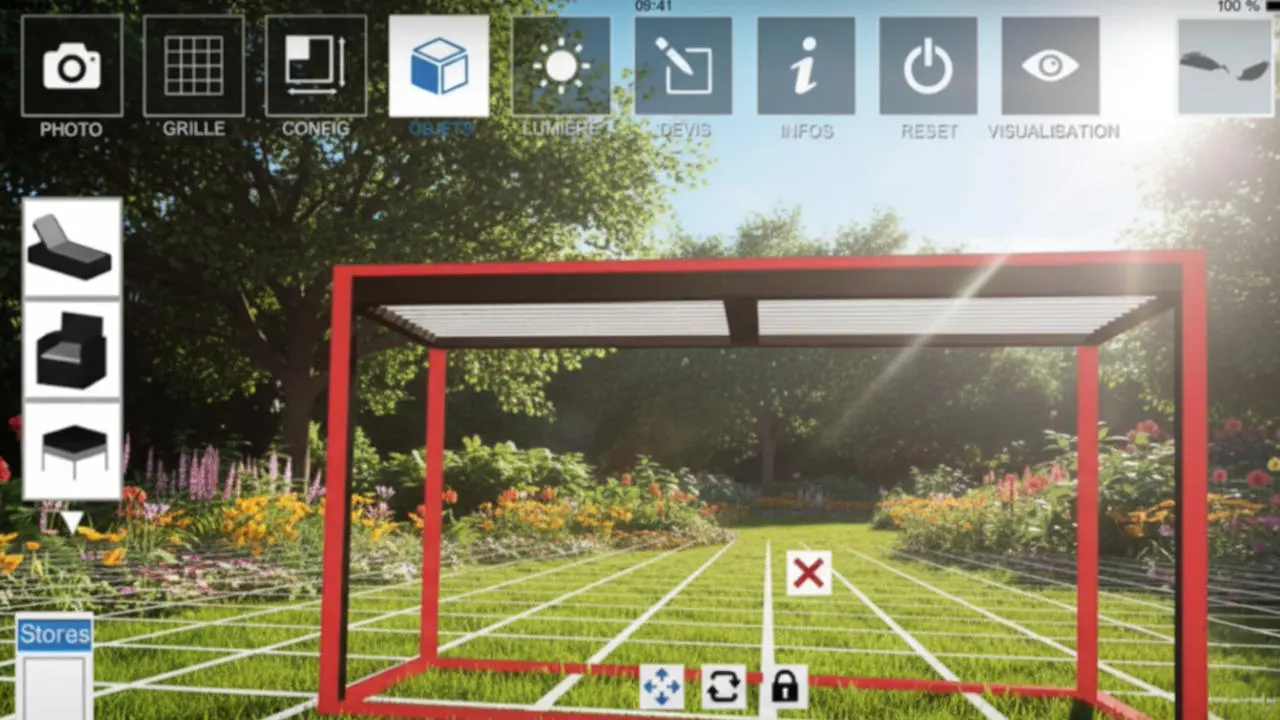
The innovation: seeing the product at home before ordering
The distinctive feature of this project lay in its field use. Sales reps needed to be able to present the product directly in the prospect's garden, with no internet connection required. The solution? Augmented reality.
Thanks to this technology, the tablet or smartphone displays the customized pergola directly in real space, as if it were already installed. The customer can immediately project themselves into the experience and make their decision with full confidence.
Features developed
- Full customization: dimensions, profiles, colors, accessories (awnings, lighting, heating...)
- Instant price calculation: integrated pricing matrix factoring in all variables
- Augmented reality mode: assisted placement of the pergola in the garden with measurement and alignment tools
- PDF quote generation: professional document created on-site, immediately shareable with the client
- Offline functionality: the full catalog and all calculations are available without a connection
Sales impact
Commercial feedback was unanimous: the ability to "see" the pergola at home before purchasing significantly reduced hesitation and accelerated decision-making. The conversion rate increased by more than 40% according to client reports.
Technology choice
The project was entirely developed with Unity 3D, an engine particularly well-suited for augmented reality applications. The technical files provided by the engineering department were reprocessed and optimized for real-time rendering on mobile devices — a significant technical challenge given the complexity of the aluminum profiles.
Premium TV furniture configurator
In the premium furniture sector, customization is a major selling point. A manufacturer of custom TV units dedicated to home cinema installations needed a tool enabling their clients to create their ideal piece of furniture directly in-store.
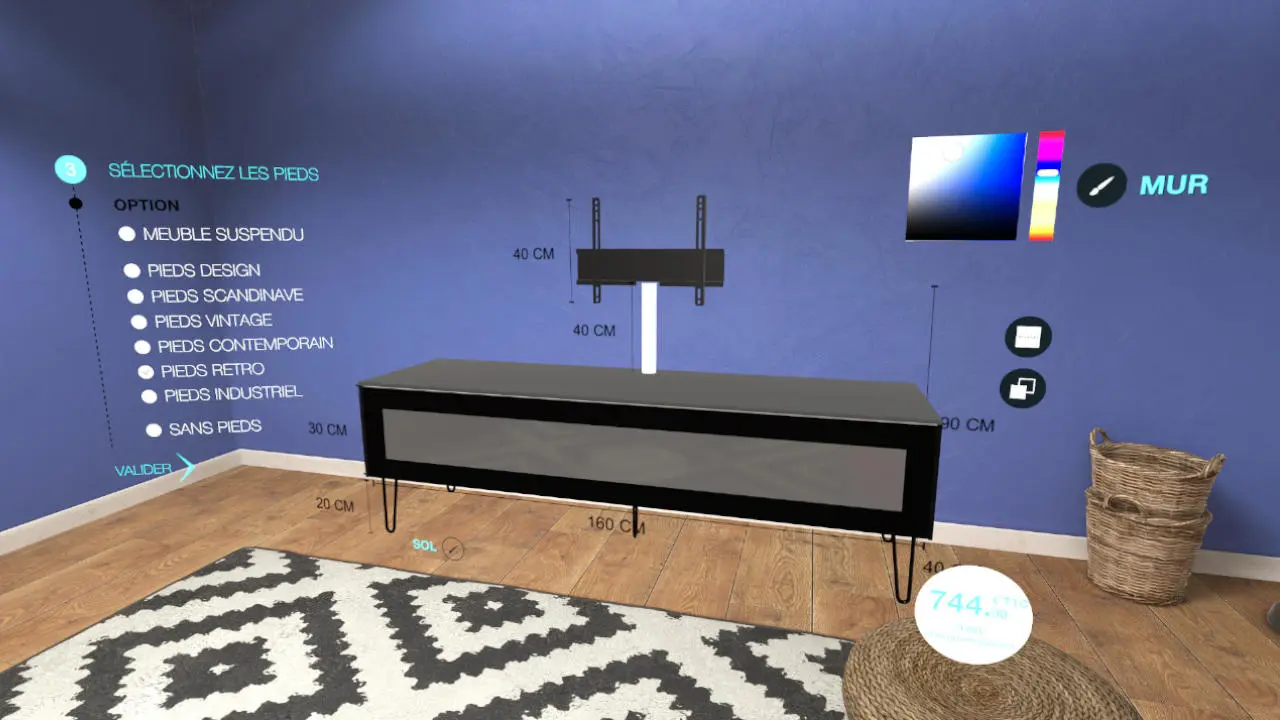
The challenge of infinite variability
Unlike mass-produced items, these high-end pieces of furniture offer total freedom: shape, dimensions, materials, finishes, compartments... The possible combinations number in the millions. The configurator therefore had to guide the customer while preserving this flexibility.
Experience developed
The application was designed to be used on tablets integrated into elegant display stands, creating a genuine focal point in showrooms.
The customization journey follows an intuitive logic:
- Choice of overall shape (linear, corner, wall-mounted...)
- Definition of exact dimensions
- Material selection (solid wood, lacquered, glass...)
- Customization of finishes and colors
- Addition of accessories (LED backlighting, cable management systems, modular compartments...)
At each step, the price updates in real time and the 3D view shows the result. The customer immediately sees the visual and financial impact of each choice.
When the configuration is complete, a "Call a Consultant" button summons a sales advisor with the project already prepared. A personalized quote can be sent by email on the spot.
Brand-Level Customization
An interesting feature: the manufacturer distributes its products through several retail chains. We therefore developed a back-office allowing the interface to be customized per point of sale: visual identity, commercial messaging, available product ranges. One solution, deployed as multiple white-label versions.
On-the-Ground Results
The tool transformed the in-store experience. Customers spend an average of 15 to 20 minutes creating their ideal piece of furniture — a level of engagement that translates into a strong attachment to the project.
Automotive configurators: Camper Vans and Cargo Bikes
The automotive sector has historically been the pioneer of 3D configurators. I had the opportunity to work on two projects in this space, targeting very different audiences.
Eco-Camper Van: custom travel
A manufacturer of converted vans aimed at road-trip enthusiasts wanted to offer a customization experience worthy of major automotive brands, adapted to the specific complexity of their product.
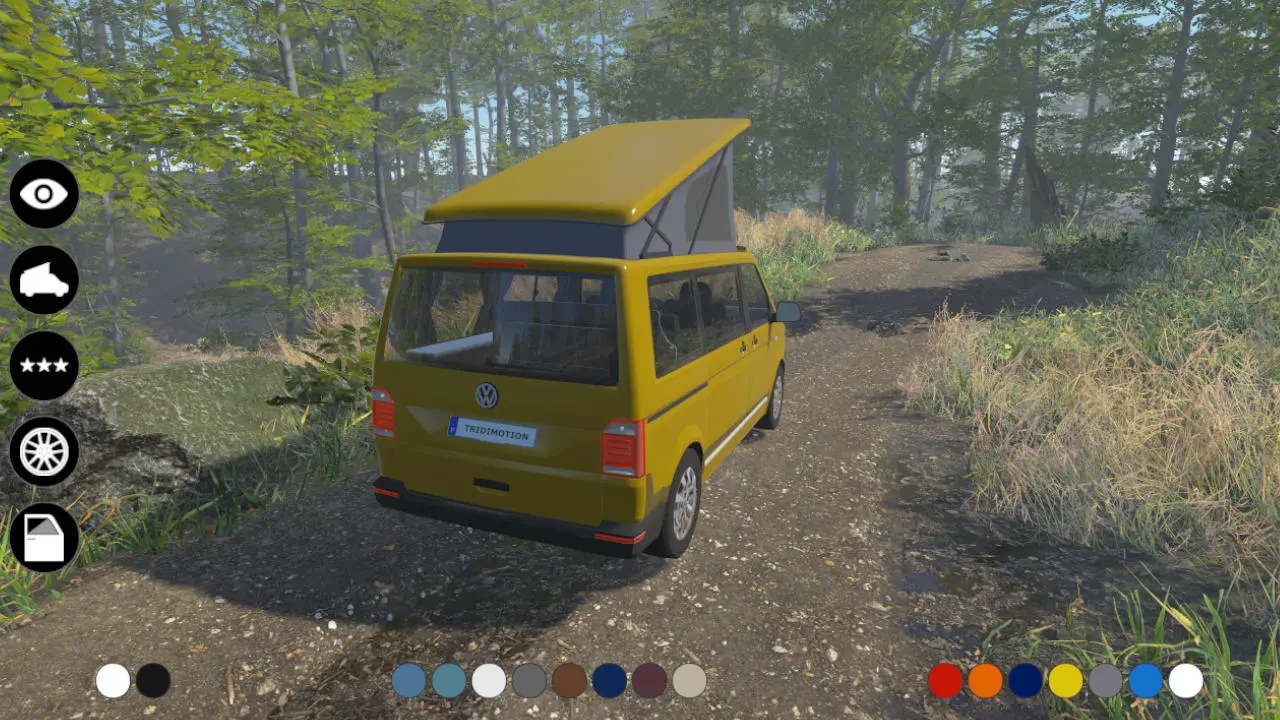
A converted van is not just about choosing a body color: it's a genuine mobile living space with dozens of parameters (furniture layout, kitchen equipment, electrical system, insulation, sleeping arrangements...).
The developed configurator allows users to:
- Customize the exterior (color, wheels, accessories)
- Design the interior layout by freely positioning modules
- Choose equipment (hob, refrigerator, solar panels...)
- Select materials and fabrics
- Visualize the whole setup in 3D with the ability to virtually "walk through" the interior
The application automatically generates a price estimate and allows users to request a detailed quote. Prospects can also save their configuration to return to it later, creating a lasting connection with the brand.
Professional Cargo Bike: Green Urban Mobility
For a cargo bike manufacturer targeting professionals (food delivery, urban logistics), the challenge was to offer a tool for adapting the vehicle to the specific business needs of each client.
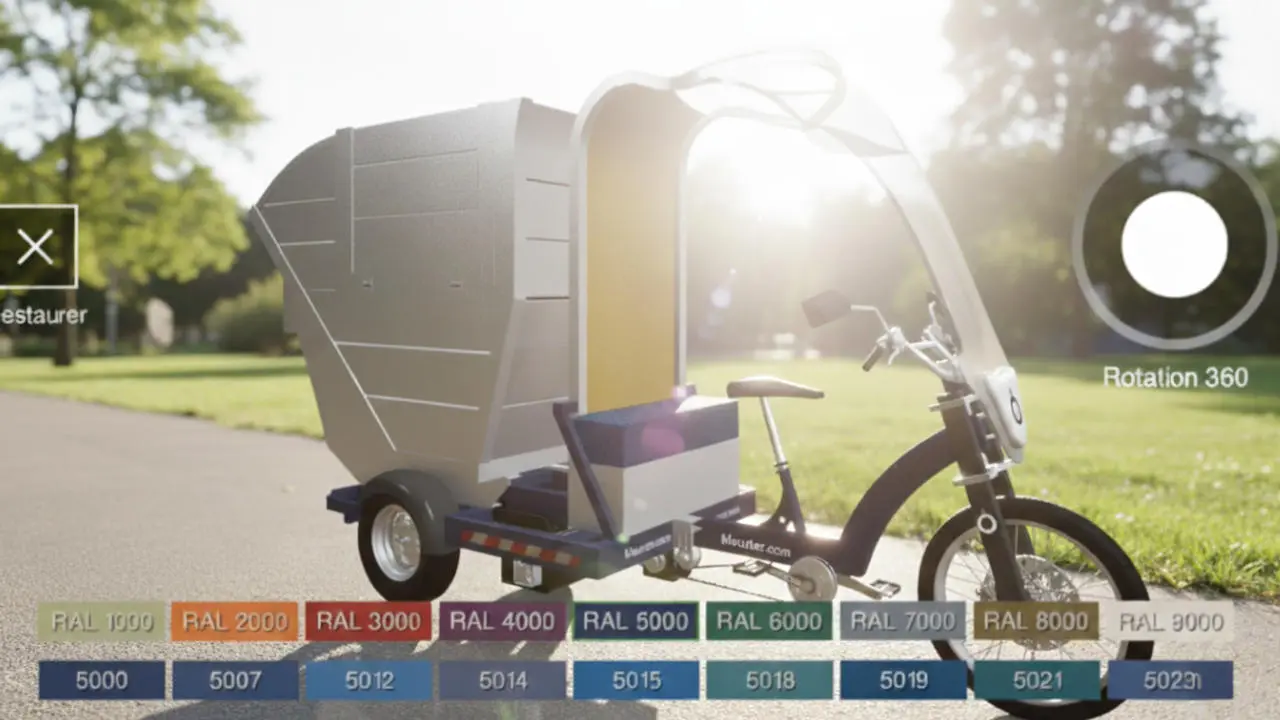
Key features developed:
- Business-based selection: the application offers pre-configured base setups tailored by trade (baker, florist, courier...)
- Visual customization: the professional can upload their logo and position it on the available surfaces of the trailer
- Functional adaptation: choice of compartments, closing systems, electrical options
- Contextual visualization: the bike can be displayed in various urban settings for better projection
- Augmented reality mode: particularly useful for assessing the vehicle's real-world footprint
This business-oriented approach considerably accelerated the sales process by directly proposing tailored solutions, while still leaving room for further personalization.
Modular Pop-Up stand configurator
An original project involved a manufacturer of modular wooden structures for event stands. The challenge was to create a tool enabling users to virtually design a stand from pieces that clip together, while guaranteeing the structural feasibility of the construction.
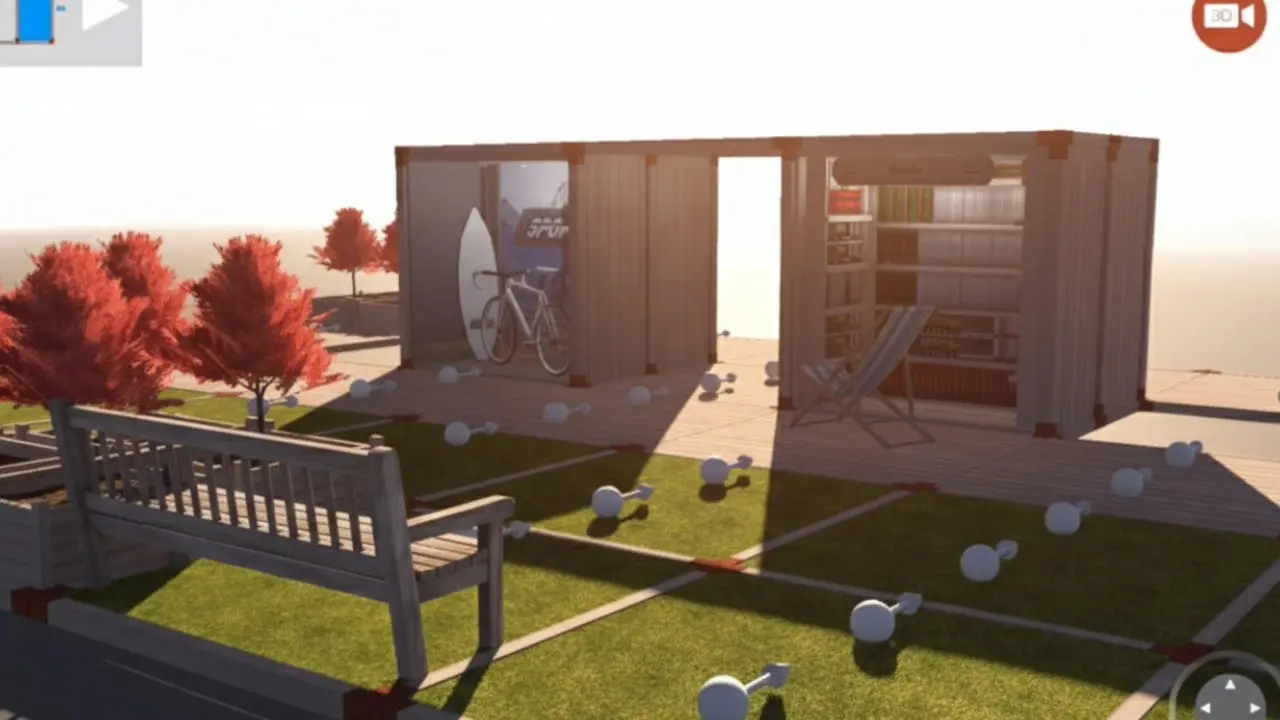
The complexity of constrained assembly
Unlike other configurators where choices are predefined, here the user freely builds their structure piece by piece. The system must therefore verify in real time:
- The compatibility of pieces with one another
- The overall stability of the structure
- Compliance with assembly constraints (certain pieces can only be fixed in specific positions)
- Feasibility across multiple levels
Solution developed
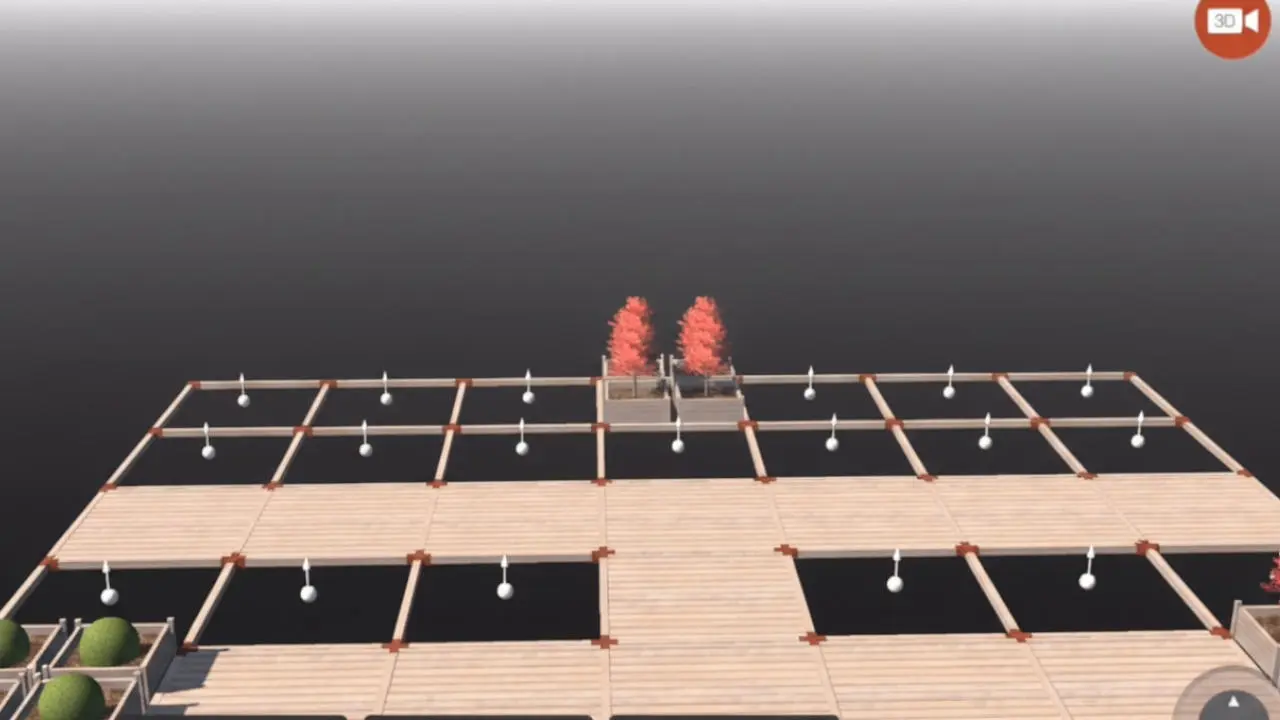
The interface works like a virtual building set:
- A 3D platform where the user positions pieces
- A module catalog indicating possible fixing points
- Automatic constraint checking at each action
- A visual guidance system (green/red zones) to indicate where a piece can be placed
- The ability to add accessories (shelving, lighting, panels...)
Once the stand is designed, the user can generate a realistic 3D render with enhanced lighting and shadows, perfect for presenting the project to an end client.
Evolution: ERP integration
The success of the first version led to the development of a V2 integrated with the manufacturer's information system:
- Automatic upload of projects to the cloud
- Real-time inventory management (prevention of using unavailable parts)
- Logistics planning based on the event location
- Automatic calculation of manufacturing and transportation costs
This evolution transformed a simple design tool into a true end-to-end management platform.
Technologies used
The project was developed with Unity 3D in C#. The complexity lay in implementing real-time constraint verification algorithms, requiring extensive optimization to maintain fluid performance on tablets. The 3D modeling of parts was carried out at exact scale to guarantee assembly precision.
Keys to a successful 3D Configurator
These various projects allowed me to identify the essential success factors:
1. The Balance Between Freedom and Guidance
A good configurator offers flexibility without losing the user. Technical constraints must be invisible but rigorously enforced.
2. Performance First
Nothing kills engagement faster than a slow application. Every action must produce an instant result, which requires constant optimization of 3D models and calculations.
3. Integration into Business Processes
An isolated configurator loses much of its value. Interconnection with CRM, ERP, and inventory management systems transforms the tool into a true business accelerator.
4. Adaptation to the Usage Context
A web application accessed from home is not designed the same way as an in-store tablet or a mobile field tool. Context dictates the interface and priority features.
5. Automated Technical Validation
Customers must be free to create without the risk of designing something unfeasible. Verification algorithms are the invisible but crucial core of these applications.
The futur of Immersive Experiences
3D configurators continue to evolve rapidly. Technologies I have explored in other projects open up new possibilities:
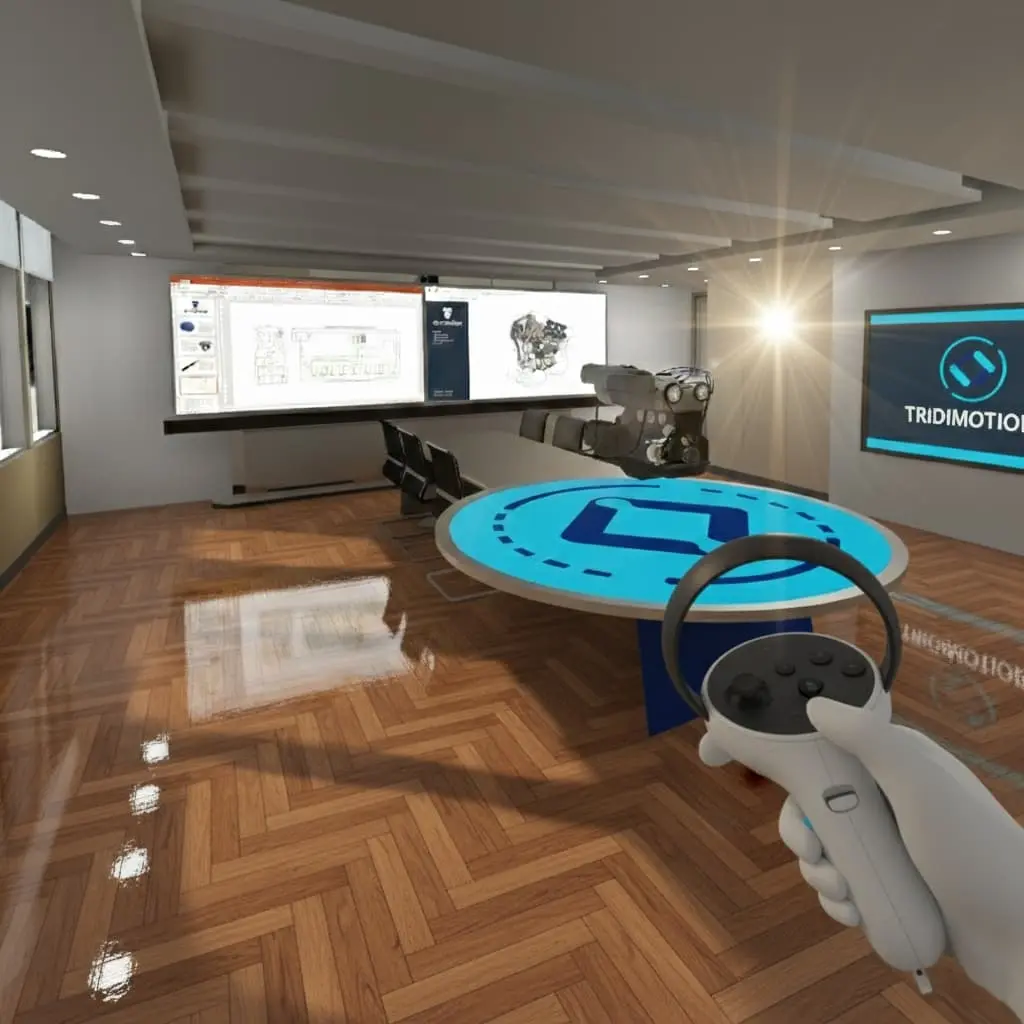
- Collaborative virtual spaces: imagine designing your deck with your architect in a metaverse, each with their own avatar, manipulating elements together in real time
- Artificial intelligence: systems capable of automatically suggesting optimal configurations based on your needs and constraints
- Hyperrealistic rendering: WebGPU is reaching maturity, enabling even more faithful renders on the web
- Real-world data integration: connection with IoT devices to automatically adapt configurations to real conditions (precise measurements, sunlight analysis...)
AI at the service of the configurator:
- Generative Design & AI Recommendation: Instead of starting from a blank page, the user describes their need in natural language ("I want a modern deck for 6 people with a vegetable garden corner"). An AI agent instantly generates three optimized 3D proposals based on technical constraints and budget.
- Computer Vision for AR: Using AI to analyze the real environment (garden, living room) and automatically suggest the dimensions and product colors that best harmonize with the existing space.
- Intelligent Configuration Assistant: An "Agentic" chatbot integrated into the configurator that guides the user, answers technical questions about materials, and validates regulatory compliance (e.g., building safety standards) in real time.
Do you Have a 3D configurator project?
Whether you want to allow your customers to customize your products, accelerate your sales process, or reduce quoting errors, a well-designed 3D configurator can transform your business.
Every project is unique and deserves a tailor-made solution, adapted to your products, your processes, and your customers. Drawing on these varied experiences, I would be delighted to discuss your project through my studio tridimotion.
Feel free to reach out to discuss your specific needs.
This article is part of a series on my professional experiences in developing innovative solutions. To discover more projects, visit my portfolio..